

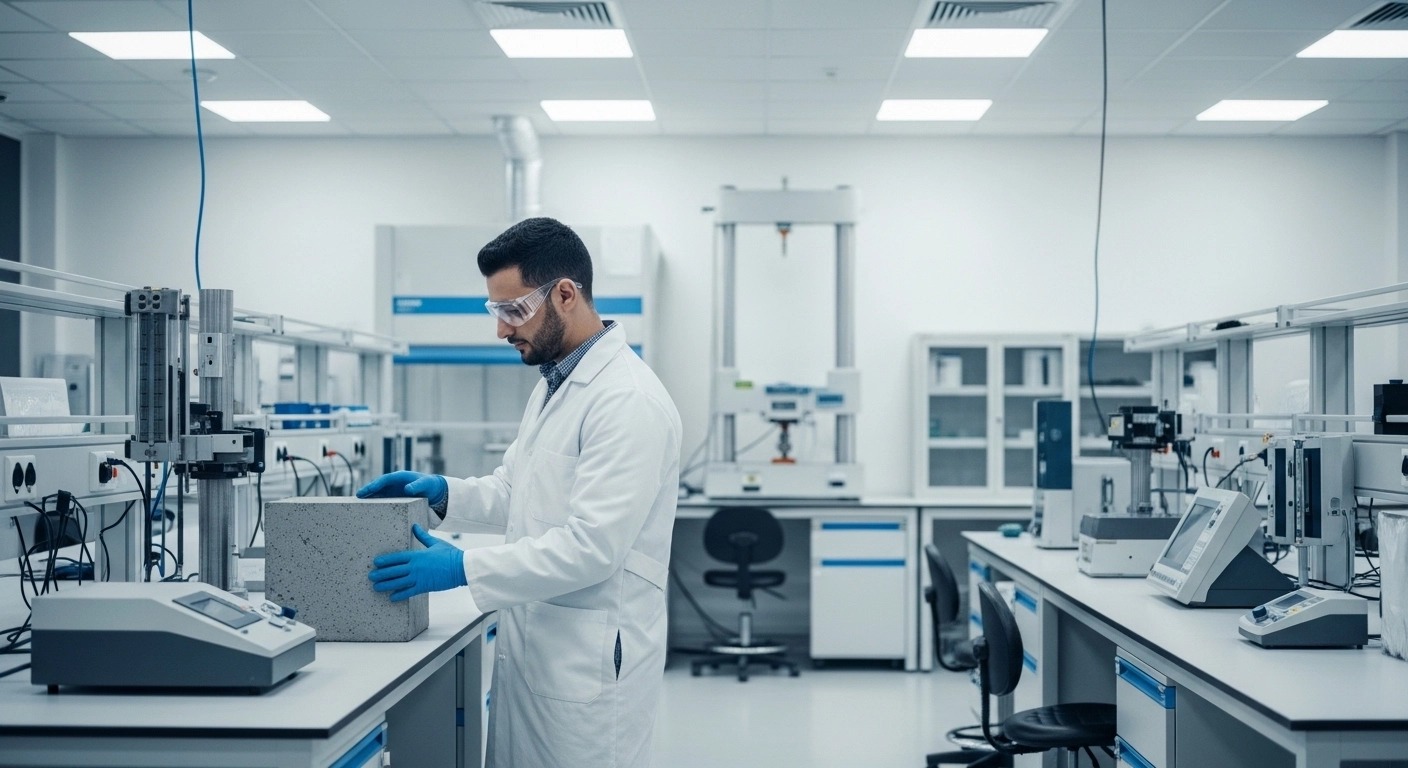
When a construction project begins in Dubai, quality control starts at the laboratory. Partnering with an accredited material testing laboratory in UAE means every result is technically sound, regulatory-compliant, and accepted by the relevant authorities. Whether your project involves deep foundations, reinforced concrete structures, or road infrastructure, material testing forms the backbone of quality assurance. This blog explains what accreditation means, why construction material testing is non-negotiable for project safety, and what to look for when selecting the right laboratory partner in Dubai.
TL;DR / Key Takeaways
- An EIAC-accredited material testing laboratory in UAE provides results recognized by government authorities and regulatory bodies across Dubai.
- Construction material testing covers concrete, soil, steel, aggregate, and chemical composition, each directly affecting structural performance.
- Selecting a certified construction material testing lab reduces the risk of non-compliance, rejected reports, and costly project delays.
What Accreditation Actually Means for a Testing Laboratory
Accreditation confirms that a laboratory operates according to internationally recognized technical and quality standards.
In the UAE, the Emirates International Accreditation Centre (EIAC) is the national authority responsible for accrediting testing laboratories. EIAC accredits facilities against the ISO/IEC 17025 standard, which sets requirements for technical competence, impartiality, and consistent management systems within testing organizations. This standard is recognized globally and ensures that results produced by an accredited facility are reliable, repeatable, and accepted by regulatory bodies in Dubai.
When you choose an accredited material testing laboratory in UAE, you are not simply hiring a lab. You are engaging a facility that has undergone rigorous independent assessment, maintains calibrated equipment, employs qualified engineers, and follows documented testing procedures. This level of accountability protects your project at every stage, from initial ground investigation to final structural verification. Every test report carries the weight of an independently verified process behind it.
Non-accredited laboratories may offer lower rates, but the consequences are significant. Test reports from unaccredited facilities may not be recognized by Dubai Municipality, the Roads and Transport Authority, or the consulting engineers overseeing your project. This can force expensive retesting, delay permit approvals, and expose the project team to unnecessary contractual risk. Accreditation is not a formality. It is a technical guarantee that every stakeholder can rely on.
The Critical Role of Material Testing in Construction Safety
Material testing ensures every element of a structure meets the technical specifications required for safe, long-term performance.
In construction, materials that fail to meet specifications can produce consequences that range from costly rework to structural deficiencies that are expensive to address after the build. Construction material testing covers the evaluation of concrete compressive strength, aggregate gradation, cement properties, asphalt composition, and water quality. Each of these parameters directly influences how a structure will perform under real load conditions, over time, and in the climatic environment specific to Dubai and the wider UAE.
Testing is not simply a regulatory requirement to satisfy. It is a technical safeguard that protects the integrity of your structure from the ground up. A concrete mix that passes strength tests at 28 days confirms that design calculations are based on accurate performance data. An aggregate that meets gradation requirements ensures that road layers and base courses do not degrade prematurely under traffic load. These results are only possible when a trusted construction material testing lab applies consistent, accredited methods to every sample it receives.
Dubai’s construction sector operates under strict quality codes and municipal regulations. Material test reports form a critical part of the documentation required for permit approvals, regulatory inspections, and project sign-off. A reliable laboratory partner ensures this documentation is always available, accurate, and fully compliant with applicable standards, keeping your project on schedule and free from administrative setbacks.
Essential Testing Services That Support Project Compliance
A full-service accredited laboratory covers soil, structural, steel, and chemical testing across the entire construction project lifecycle.
Construction projects in Dubai require testing across multiple technical disciplines, and an accredited material testing laboratory in UAE must be equipped to deliver all of them. Geotechnical investigation services assess soil bearing capacity, layer composition, and groundwater conditions before foundation design decisions are finalized. This stage is critical, since inaccurate ground data can result in under-designed foundations that compromise the entire structure above.
Structural testing and analysis verifies the performance of load-bearing elements, including columns, beams, and slabs, under defined loading conditions. This service is essential for confirming that built structures match the assumptions made during the design phase. Steel testing and NDT services evaluate rebar tensile strength, surface integrity, and internal flaws using non-destructive methods that preserve the element under examination.
Chemistry laboratory services provide material composition analysis and water quality testing. Both directly influence concrete durability and long-term structural health. Projects in coastal or high-humidity environments, such as those commonly developed across Dubai, benefit significantly from chemistry-based assessments that detect chloride content, sulfate concentration, and other parameters linked to corrosion and material degradation over time.
By working with a single accredited laboratory offering all of these services, project teams gain consistent reporting formats, unified documentation, and a single point of technical accountability throughout the build.
How to Choose the Right Material Testing Laboratory for Your Project
The right laboratory partner combines accreditation, technical scope, qualified personnel, and reliable reporting turnaround for your specific project requirements.
Before selecting a material testing laboratory in UAE, project managers and contractors should verify EIAC accreditation status. This information is publicly available on the official EIAC website, which publishes the current accreditation scope for every certified laboratory in the country. Always confirm that the laboratory’s scope covers the specific tests your project requires. A lab accredited for concrete testing may not hold accreditation for geotechnical or chemical analysis.
Evaluate the laboratory’s experience with similar project types. A facility that regularly serves infrastructure contractors, civil engineering firms, and real estate developers in Dubai will have established protocols and clear familiarity with local regulatory requirements. Request sample reports to assess formatting, technical detail, and the clarity of documentation provided to clients and authorities.
Turnaround time is a practical concern that directly affects construction schedules. Testing delays can stall approvals and slow down the overall build program. A well-organized laboratory communicates clearly about expected delivery timelines and operates a structured reporting process. Equipment calibration records and personnel qualification documents should also be available on request, as transparency in both areas is a requirement of ISO/IEC 17025 compliance. Choosing a laboratory that meets all of these criteria positions your project for clean regulatory review and uninterrupted progress.
The Real Cost of Skipping Accredited Testing
Relying on a non-accredited laboratory may appear cost-effective upfront but often generates significantly greater expenses later in the project.
The decision to use a lower-cost, non-accredited laboratory may seem financially sensible in the short term. In practice, it frequently generates costs that exceed the original saving by a wide margin. Test reports from unaccredited facilities may be rejected outright by project consultants, Dubai Municipality inspectors, or the government authorities responsible for approving construction quality. This rejection forces the project team to repeat sampling, retest materials, and resubmit documentation, adding both direct costs and time delays to the program.
In more serious cases, inaccurate results from unreliable laboratories have led to material quality issues that were only identified after construction had advanced significantly. Addressing structural deficiencies at that stage is considerably more expensive than preventing them through proper testing before materials are incorporated into the structure. The investment in an accredited material testing laboratory in UAE at the outset is a direct and measurable risk mitigation measure.
Beyond financial consequences, relying on unverified testing data exposes projects to legal and contractual risk. Engineering sign-offs, insurance approvals, and regulatory certifications all depend on the validity and traceability of test reports. Accredited testing ensures that every result is defensible, documented, and recognized by all parties involved in the delivery and approval of your project.
Conclusion
Choosing an accredited material testing laboratory in UAE is one of the most important decisions a project team can make before construction begins. Reliable, accredited test data supports better engineering decisions, ensures full regulatory compliance, and protects the long-term safety of every structure built in Dubai. From soil investigation and structural analysis to steel verification and chemistry testing, each service contributes to a complete quality assurance framework. Terrasearch Gulf is an EIAC-accredited laboratory in Dubai offering a comprehensive range of geotechnical, structural, and material testing services. Contact us today to discuss your project requirements and build on a verified foundation.
Frequently Asked Questions
What is an accredited material testing laboratory in UAE?
An accredited material testing laboratory in UAE is a facility certified by EIAC to perform construction and geotechnical tests under ISO/IEC 17025 standards. Accreditation confirms technical competence, calibrated equipment, and results that are accepted by regulatory authorities in Dubai.
Why does accreditation matter when choosing a material testing lab in Dubai?
Accreditation ensures the laboratory follows internationally recognized testing standards. In Dubai, test reports from non-accredited labs may be rejected by Dubai Municipality or project consultants, leading to costly retesting, delays, and compliance failures that affect your construction timeline.
What is construction material testing and why is it important?
Construction material testing evaluates concrete, steel, aggregate, cement, and asphalt to verify they meet project specifications. It is essential for structural safety, regulatory compliance, and ensuring that all materials perform reliably under real load and environmental conditions throughout the structure.
What types of tests does a construction material testing lab in Dubai perform?
A construction material testing lab in Dubai typically performs concrete compressive strength tests, aggregate gradation analysis, asphalt composition checks, steel tensile testing, soil investigation, and chemical analysis. These tests cover the full quality assurance lifecycle of any construction project.
How do I verify if a material testing laboratory in UAE is EIAC accredited?
You can verify EIAC accreditation by checking the official EIAC website, which maintains a publicly accessible directory of all accredited laboratories in the UAE. Always confirm the lab holds accreditation for the specific tests listed within your project’s testing services scope.
What is the difference between accredited and non-accredited material testing labs?
An accredited material testing laboratory in UAE operates under verified quality systems with calibrated equipment and qualified personnel. Non-accredited labs lack independent oversight, and their reports may not be recognized by Dubai authorities, putting project approvals at risk.
Can a single accredited lab handle all material testing needs for a Dubai project?
Yes, a full-service accredited laboratory can cover geotechnical investigation, structural testing, steel and NDT services, and speciality testing. Consolidating all testing under one accredited provider ensures consistent documentation and a single point of technical accountability for your project.
What happens if construction material testing is skipped or done by an unaccredited lab?
Skipping material testing or using an unaccredited lab can result in rejected test reports, regulatory non-compliance, and rework costs that far exceed the original saving. In serious cases, undetected material deficiencies can compromise the structural integrity of completed construction.
How does material testing support regulatory compliance in Dubai construction projects?
Material testing provides verified documentation of concrete strength, soil conditions, and material composition that Dubai Municipality and other regulatory bodies require for permit approvals and sign-off. Accredited test reports form a legally recognized evidence trail throughout the construction process.
What should I look for when selecting a material testing laboratory in UAE for my project?
Look for valid EIAC accreditation covering your required test scope, experience with similar project types, qualified engineering personnel, transparent reporting timelines, and calibration records. These factors ensure your laboratory partner can fully support compliance and quality assurance needs across your Dubai project.