

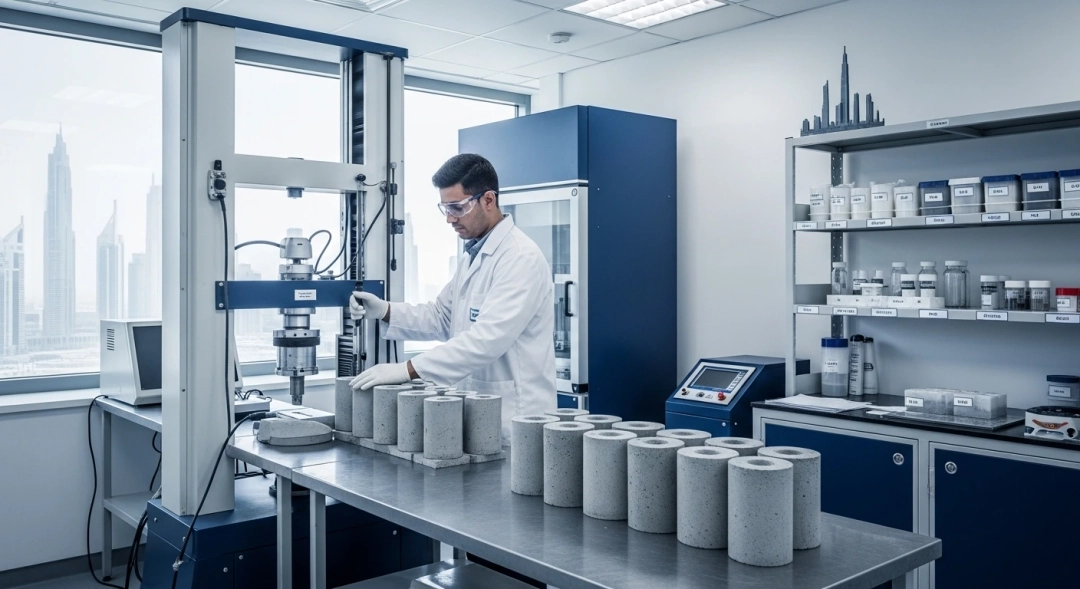
Dubai’s construction sector operates at a scale that demands precision at every stage. Every material placed in a structure, from steel reinforcement to concrete and asphalt, must perform reliably under real-world conditions. An ASTM testing lab in Dubai helps engineering teams confirm that materials meet globally recognized performance benchmarks. ASTM International standards provide a trusted framework for material evaluation across industries. This blog explains how these standards work, which sectors depend on them, and why partnering with an accredited testing laboratory is critical for construction quality in the UAE.
Key Takeaways
- ASTM standards define clear performance requirements for materials used across construction, steel, infrastructure, and geotechnical applications.
- An accredited ASTM testing lab in Dubai helps contractors and engineers verify material quality before and during project execution.
- EIAC-accredited laboratories apply ASTM certified lab UAE protocols to support regulatory compliance and engineering confidence across projects.
What Are ASTM Standards and Why Do They Matter in Dubai?
ASTM International publishes over 12,000 technical standards used globally to define how materials should be tested and what results indicate acceptable performance.
ASTM International is one of the most recognized standards development organizations in the world. It covers materials, products, systems, and services across dozens of industries. Each standard specifies test procedures, equipment requirements, sample conditions, and acceptable result ranges. This precision eliminates ambiguity from quality control and gives project teams a reliable basis for engineering decisions.
In Dubai, where construction volumes are large and quality expectations are high, ASTM standards serve both a practical and a regulatory function. Project engineers, consultants, and contractors rely on these standards to evaluate whether materials meet required safety and durability thresholds. Without standardized testing, material deficiencies can remain undetected until they create structural or operational problems at a later stage.
ASTM standards apply to a wide range of construction-relevant materials in the UAE, including concrete, structural steel, aggregates, asphalt, soil, and chemical compositions. For projects requiring regulatory approvals, test reports referencing ASTM standard testing Dubai methods strengthen documentation and support faster technical clearances. Many local authorities and international consultants specifically request ASTM-referenced laboratory reports.
How an ASTM Testing Lab in Dubai Supports Key Industries
Different sectors in the UAE rely on ASTM-compliant testing to confirm material performance and meet project safety requirements.
Multiple industries depend on standardized material testing to ensure project integrity. Understanding which sectors require ASTM methods helps project teams select the right testing partner and scope of services.
Construction and Civil Engineering
Civil engineering projects in Dubai involve large volumes of structural concrete and steel. These materials must meet ASTM specifications for compressive strength, tensile capacity, and long-term durability. Construction materials testing conducted under ASTM protocols gives engineers verified data to support design decisions and regulatory submissions. Testing concrete cores, cement samples, and aggregates according to ASTM methods ensures that materials on site match what was approved at the design stage.
Infrastructure and Road Projects
Road and highway projects require rigorous testing of asphalt and aggregates. ASTM standards for asphalt mixtures define acceptable gradation, binder content, and stability values. Testing labs that apply ASTM methods help contractors confirm that road materials will perform under UAE traffic loads and high-temperature conditions. Consistent testing also provides documentation for government infrastructure projects that require third-party quality verification.
Industrial and Oil and Gas
Steel testing and NDT services aligned with ASTM standards evaluate tensile strength, hardness, chemical composition, and weld integrity. Industrial facilities and pipeline systems require steel components that meet strict ASTM material specifications. This testing is essential for projects where material failure carries serious safety and financial consequences. Non-destructive testing methods aligned with ASTM standards allow inspectors to assess components without causing damage, which is critical for in-service evaluations.
Real Estate and High-Rise Development
High-rise construction projects in Dubai depend on verified concrete mixes, structural steel, and reinforcement materials. ASTM-based testing confirms that concrete achieves required strength before structural loads are applied. It also supports quality control at each construction stage, which is important when multiple contractors and subcontractors are involved.
Core ASTM Testing Services Offered by Accredited Labs in Dubai
An ASTM testing lab in Dubai covers testing categories from concrete and steel to soil investigation and chemical analysis, all aligned with internationally recognized methods.
The following areas represent the core scope of ASTM-aligned services available through accredited laboratories in the UAE.
Concrete Testing
ASTM C39 governs compressive strength testing, while ASTM C78 covers flexural strength. Labs evaluate fresh and hardened concrete to confirm that mixes meet design specifications at every project stage. Results are used by structural engineers to validate that placed concrete achieves the required performance targets.
Steel and Rebar Testing
ASTM A615 and ASTM A706 define performance requirements for deformed steel bars in reinforced concrete structures. Testing covers yield strength, tensile strength, and elongation. These results confirm that rebar meets structural design expectations before it is embedded in permanent construction.
Aggregate and Asphalt Testing
ASTM C136 guides sieve analysis for fine and coarse aggregates used in concrete and road base applications. ASTM D6926 governs asphalt mixture specimen preparation. These methods verify gradation and stability values that directly affect pavement performance and concrete mix design quality.
Geotechnical and Soil Testing
Geotechnical investigation services that follow ASTM standards such as ASTM D1586 for standard penetration testing and ASTM D2487 for soil classification deliver accurate subsurface data for foundation design. This is especially relevant for projects involving deep excavations or variable soil profiles. Reliable soil data reduces foundation risk and supports informed engineering decisions before construction begins.
Chemical and Water Testing
Chemistry lab and material analysis services support projects where material composition data is required for engineering or compliance purposes. ASTM methods guide chemical testing of concrete, construction water, and building materials. This analysis is particularly valuable for projects with specific durability requirements or environmental compliance conditions.
Why EIAC Accreditation and ASTM Compliance Strengthen Testing Credibility
When an EIAC-accredited laboratory applies ASTM methods, it combines two layers of quality assurance that strengthen the credibility of every test result and report.
EIAC accreditation is the primary benchmark for laboratory quality in the UAE. The Emirates International Accreditation Centre evaluates labs against ISO/IEC 17025, the international standard for laboratory competence. Accredited labs operate with validated testing methods, calibrated equipment, and qualified technical personnel.
When an EIAC-accredited laboratory applies ASTM testing methods, it delivers a dual quality assurance framework. The accreditation confirms that the lab itself operates to a high technical standard. The ASTM methods confirm that the tests align with global engineering expectations. According to ASTM International, applying internationally recognized test methods within an accredited laboratory framework is fundamental to producing reliable and comparable results across projects and geographies.
This combination is particularly significant in Dubai, where regulatory bodies and project consultants often require reports from accredited facilities. An ASTM certified lab UAE that also holds EIAC accreditation provides a strong technical foundation for all project documentation and engineering submissions. It also makes results easier to verify by international project stakeholders who rely on globally accepted testing frameworks.
How to Select the Right ASTM Standard Testing Dubai Provider
Choosing a testing lab affects the accuracy of your material data and the credibility of your engineering documentation, so the right criteria matter.
Scope of EIAC Accreditation
Verify that the lab holds EIAC accreditation for the specific tests your project requires. A broad accreditation scope indicates that the lab can support multiple testing needs across different materials and project phases under one facility.
Technical Range of Services
Look for labs that offer structural testing and analysis in addition to standard material tests. This broader technical capability means you have access to specialist support for complex structural evaluation needs without switching providers during a project.
Report Quality and Turnaround Time
Laboratory reports should be complete, clearly formatted, and ready for regulatory submission. Test results must reference the applicable ASTM standard, include all required parameters, and clearly state result interpretations. Ask about typical turnaround times to ensure that test scheduling aligns with your construction program.
Experience Across UAE Projects
A lab with experience across diverse UAE construction and infrastructure projects understands the practical demands and regulatory requirements of the local market. This experience supports more accurate and contextually relevant testing advice tailored to project conditions in Dubai.
Conclusion
Material reliability must be confirmed at every stage of a construction project, starting with the first material deliveries and continuing through structural completion. An ASTM testing lab in Dubai that holds EIAC accreditation provides engineering teams with internationally recognized, verifiable material data. This supports stronger design decisions, reduces compliance risk, and builds overall confidence in project quality. Whether your project involves concrete structures, steel components, asphalt roads, soil investigation, or chemical analysis, working with an ASTM certified lab UAE ensures your materials meet the performance standards that modern construction demands. Contact Terrasearch Gulf to discuss your testing requirements and learn how our accredited services can support your next project in Dubai and across the UAE.
Frequently Asked Questions
What is an ASTM testing lab and what services does it provide?
An ASTM testing lab is a laboratory that applies ASTM International standards to evaluate the quality and performance of materials. Services typically include concrete testing, steel testing, soil investigation, aggregate analysis, and chemical testing, all conducted using defined ASTM test methods.
Why are ASTM standards important for construction projects in Dubai?
ASTM standards provide internationally recognized criteria for evaluating construction materials. In Dubai, project engineers and regulatory authorities use these standards to confirm material compliance, support design decisions, and ensure that materials perform reliably under local environmental and load conditions.
What does EIAC accreditation mean for a testing laboratory in the UAE?
EIAC accreditation confirms that a laboratory meets ISO/IEC 17025 requirements for technical competence, validated methods, and calibrated equipment. An EIAC-accredited ASTM testing lab in Dubai produces results that are credible, reliable, and accepted by regulatory bodies and engineering consultants across the UAE.
Which ASTM standards apply to concrete testing in construction?
Common ASTM standards for concrete testing include ASTM C39 for compressive strength and ASTM C78 for flexural strength. These standards define sample preparation, testing procedures, and acceptable result thresholds that labs apply when evaluating concrete for construction use.
How does an ASTM certified lab UAE support steel and rebar testing?
An ASTM certified lab UAE tests steel and rebar according to standards such as ASTM A615 and ASTM A706. Steel testing and NDT services cover yield strength, tensile strength, elongation, and chemical composition to verify that reinforcement meets structural design requirements.
What ASTM methods are used in geotechnical investigation?
Geotechnical testing commonly follows ASTM D1586 for standard penetration testing and ASTM D2487 for soil classification. These methods provide subsurface data that engineers use for foundation design, particularly on projects with challenging soil profiles or deep excavation requirements.
Why do project consultants request ASTM-referenced laboratory reports?
ASTM-referenced reports provide globally recognized evidence of material quality and testing methodology. Consultants and regulatory authorities use them to verify that testing was conducted according to defined standards, which supports project approvals and international project documentation requirements.
What is the difference between ASTM and other testing standards like BS or ISO?
ASTM is an American-origin standard widely adopted globally, while BS standards originate from the UK and ISO standards are internationally developed. Many UAE projects accept multiple standards, but ASTM is among the most commonly referenced for construction material testing due to its detailed technical scope.
How can geotechnical investigation services help reduce foundation risk?
Accurate soil testing using ASTM methods identifies soil bearing capacity, settlement potential, and subsurface variability. Geotechnical investigation services give engineers the foundation data needed to design appropriate structural solutions and reduce the risk of unexpected ground-related problems during construction.
How do I know if an ASTM standard testing Dubai provider is qualified for my project?
Check that the lab holds EIAC accreditation for the specific tests required and has a demonstrated scope of ASTM-aligned services. Review their reporting standards, turnaround times, and project experience to confirm they can meet your technical and schedule requirements.