

Introduction
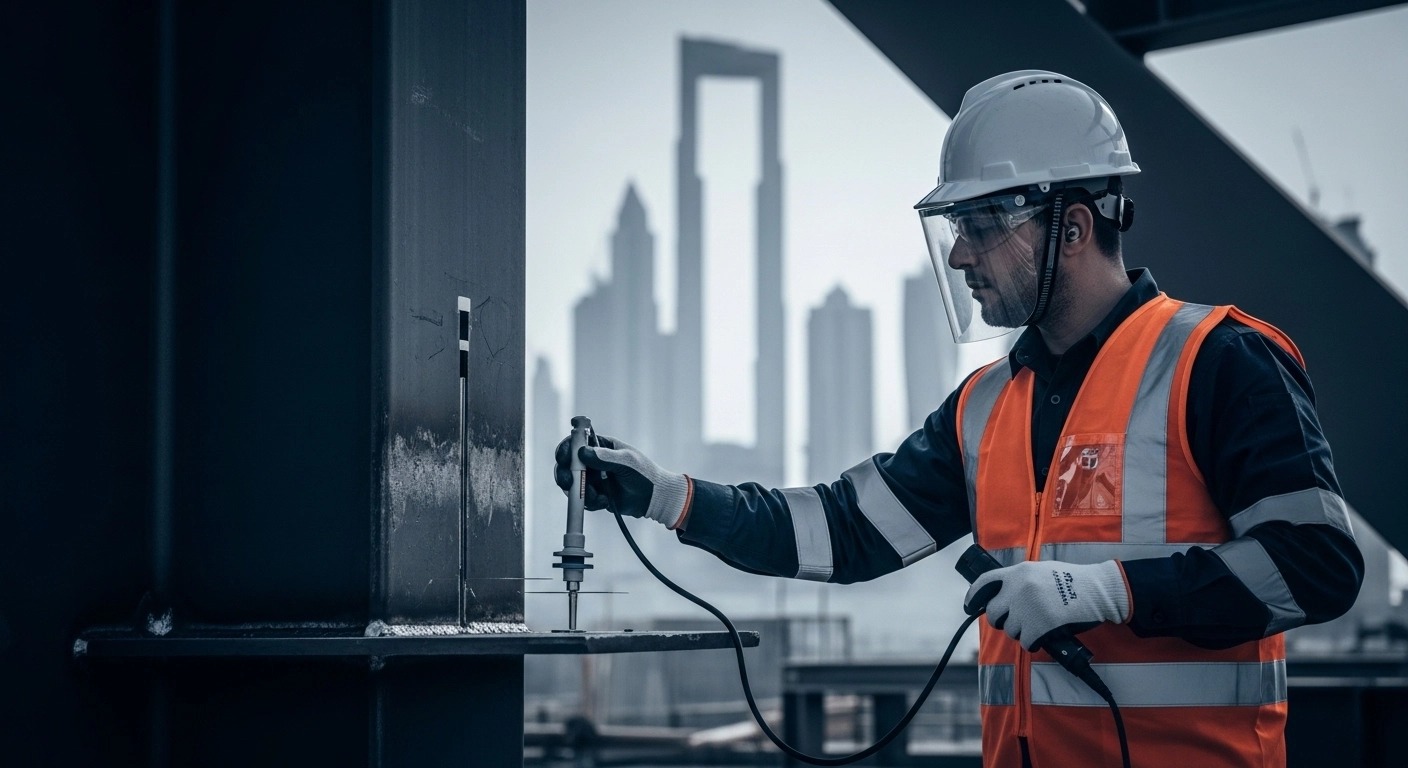
Non destructive testing UAE has become a critical requirement for any infrastructure or construction project that cannot afford material failure. As Dubai and the wider UAE continue to build at scale, from high-rise towers to industrial facilities, the ability to assess structural integrity without damaging the asset is invaluable. This blog explores the most widely used NDT methods, their real-world applications across construction and engineering sectors, and why investing in accredited non destructive evaluation UAE is a non-negotiable part of responsible project management.
Key Takeaways
- Non destructive testing UAE enables engineers to assess materials and structures without causing damage, reducing risk and project downtime.
- Core NDT methods include ultrasonic testing, radiographic testing, magnetic particle testing, and visual inspection.
- Choosing an EIAC-accredited provider for NDT services Dubai ensures results meet regulatory and safety standards.
What Is Non Destructive Testing and Why Does It Matter in UAE?
Non destructive testing (NDT) is a group of analysis techniques used to evaluate the properties of a material, component, or system without causing damage. Unlike destructive testing, NDT preserves the integrity of the asset while providing accurate data on its condition.
In the UAE, where large-scale infrastructure projects are a constant, NDT plays a vital role in construction quality assurance. Structural components such as steel beams, concrete columns, welds, and pipelines must be inspected regularly to detect any flaws before they escalate into costly failures. The UAE’s extreme climate, including heat and humidity, places additional stress on materials, making routine non destructive evaluation UAE even more essential. Regulatory bodies and project owners alike demand documented NDT results to meet compliance requirements and protect public safety.
According to the American Society for Nondestructive Testing, NDT saves the construction and manufacturing industries billions of dollars annually by identifying defects before they cause structural damage or operational shutdowns.
Core NDT Methods Used in UAE Construction Projects
Each NDT method serves a distinct purpose, and selecting the right technique depends on the material type, defect suspected, and project requirements.
The most widely applied methods in UAE construction and engineering projects include:
- Ultrasonic Testing (UT): Uses high-frequency sound waves to detect internal flaws in metals, welds, and concrete. Ultrasonic testing UAE is particularly effective for examining thick steel structures and pipe welds where visual inspection is not possible.
- Radiographic Testing (RT): Uses X-rays or gamma rays to produce images of the internal structure of a component. It is commonly used for weld inspection in pipelines and pressure vessels.
- Magnetic Particle Testing (MT): Detects surface and near-surface discontinuities in ferromagnetic materials by applying a magnetic field and iron particles. It is frequently used on structural steel components.
- Dye Penetrant Testing (PT): Identifies surface cracks or porosity in non-porous materials. It is a cost-effective technique suitable for welds and machined components.
- Visual Inspection (VT): The most basic form of NDT, yet essential for identifying visible surface defects, corrosion, and misalignment in structural elements.
Each method provides data that supports engineering decisions, project compliance, and long-term structural safety.
Applications of NDT Services in Dubai and Across the UAE
NDT services Dubai are applied across a wide range of sectors and project types, reflecting the breadth of construction and industrial activity in the region.
Structural Steel Inspection
Steel is central to most large construction projects in the UAE. Steel testing and NDT services are used to verify weld quality, detect cracks, and confirm that steel components meet specification before installation. This is especially critical for high-rise buildings where structural steel carries enormous loads.
Concrete and Construction Material Testing
NDT techniques such as rebound hammer testing, ultrasonic pulse velocity testing, and ground-penetrating radar are widely used to assess in-place concrete strength without drilling or coring. These methods feed into broader construction materials testing services, helping project teams verify quality at every stage.
Pipeline and Pressure Vessel Inspection
Radiographic and ultrasonic testing are standard in the oil, gas, and utilities sectors for pipeline weld inspection. Identifying internal corrosion or weld defects early prevents leaks, explosions, and environmental hazards.
Bridge and Infrastructure Assessment
UAE infrastructure authorities require periodic NDT assessments of bridges, tunnels, and public structures. These inspections determine remaining service life and inform maintenance or retrofit decisions.
Post-Construction and Retrofit Projects
Older buildings undergoing renovation or change of use require thorough NDT surveys to confirm that existing structural elements can support new loads. Structural testing and analysis services provide the detailed data needed to plan safe retrofits.
Why EIAC Accreditation Matters for NDT in UAE
Not all testing laboratories deliver the same level of reliability or regulatory recognition. EIAC (Emirates International Accreditation Centre) accreditation is the UAE’s national benchmark for laboratory competence. It confirms that a testing facility follows internationally recognised standards, employs qualified personnel, and produces results that can withstand regulatory scrutiny.
When a construction project relies on NDT data, that data must be trustworthy. An EIAC-accredited provider brings standardised procedures, calibrated equipment, and documented quality systems. This matters not just for safety, but also for regulatory submissions, insurance purposes, and client confidence. Projects in Dubai often require that testing certificates originate from accredited laboratories. Working with a non-accredited provider risks having test results rejected, causing costly project delays.
According to Emirates International Accreditation Centre, accredited laboratories must meet strict criteria for technical competence and impartiality, which is why project owners and government authorities specify accredited testing partners.
Beyond compliance, EIAC accreditation provides peace of mind. It means that when a report says a weld is defect-free or a concrete slab meets strength requirements, that conclusion is backed by a rigorous and audited process.
How to Choose the Right NDT Provider in UAE
Selecting the right partner for non destructive testing UAE requires evaluating several factors beyond pricing. A reliable provider should hold EIAC accreditation, employ certified NDT personnel, and have a track record of working on comparable projects in the UAE.
Key questions to ask when shortlisting an NDT provider include:
- Does the laboratory hold current EIAC accreditation?
- Are testing personnel certified to recognised standards such as ISO 9712 or ASNT Level II and III?
- Does the provider offer multiple NDT methods or specialise in only one?
- Can the laboratory deliver results within your project timeline?
- Are reports clearly documented and suitable for regulatory submission?
For projects that combine structural, chemical, and material testing needs, a multi-service laboratory offering speciality testing services alongside NDT can streamline your project’s quality assurance programme under one accredited roof.
Conclusion
Non destructive testing UAE is not a luxury or an optional compliance step. It is a fundamental pillar of construction quality assurance, structural safety, and regulatory compliance in one of the world’s most active building markets. Whether you are inspecting welds on a high-rise steel frame, verifying concrete strength in a bridge deck, or assessing pipelines for internal corrosion, the right NDT method combined with EIAC-accredited laboratory support gives you the confidence to move forward safely.
Terrasearch Gulf provides comprehensive NDT services Dubai as part of its full suite of construction testing and geotechnical investigation services. If you are planning a project that requires reliable, accredited non destructive evaluation UAE, contact Terrasearch Gulf today to discuss your testing requirements and get expert support from a qualified team.
Frequently Asked Questions
What is non destructive testing in UAE and how does it work?
Non destructive testing UAE refers to a set of inspection techniques used to evaluate materials, welds, and structural components without causing any damage. Methods such as ultrasonic, radiographic, and magnetic particle testing detect internal or surface defects, helping engineers verify quality and ensure safety before issues escalate.
What are the most common NDT methods used in UAE construction projects?
The most common methods include ultrasonic testing, radiographic testing, magnetic particle testing, dye penetrant testing, and visual inspection. Each technique targets specific defect types and material categories. NDT services Dubai providers typically recommend the appropriate method based on material type and project requirements.
Why is non destructive evaluation UAE important for structural safety?
Non destructive evaluation UAE allows engineers to detect cracks, voids, or weld defects before they compromise a structure. It prevents costly failures, supports regulatory compliance, and ensures that buildings, bridges, and infrastructure assets remain safe throughout their operational life.
When should NDT services Dubai be carried out during a construction project?
NDT services Dubai should be carried out at multiple stages, including pre-construction material verification, during construction for weld and concrete quality checks, and post-construction for final structural assessment. Pairing NDT with geotechnical investigation services provides a more complete picture of ground and material conditions on site.
What industries in the UAE rely on non destructive testing?
Non destructive testing UAE is used across construction, oil and gas, utilities, aerospace, marine, and manufacturing sectors. In the UAE, construction and infrastructure projects represent the largest demand for NDT, particularly for steel weld inspection, concrete assessment, and pipeline integrity verification.
How does ultrasonic testing UAE work and what does it detect?
Ultrasonic testing UAE uses high-frequency sound waves directed into a material. When waves hit an internal defect such as a crack or void, they reflect back to a receiver. This allows technicians to pinpoint the location, size, and depth of flaws in steel, welds, and concrete elements.
What qualifications should a certified NDT technician in UAE hold?
NDT technicians in the UAE should hold certifications to internationally recognised standards such as ISO 9712 or ASNT Level II and III. The testing laboratory they work for should also hold EIAC accreditation, confirming that personnel, equipment, and procedures meet national quality and competence benchmarks.
How does NDT differ from destructive testing in construction?
Destructive testing involves physically breaking or damaging a sample to measure properties, making it unsuitable for in-place components. Non destructive testing UAE preserves the material while providing equally accurate data. This makes NDT the preferred choice for structural elements that cannot be removed or replaced during inspection.
Can NDT be combined with other material testing services in UAE?
Yes. NDT works most effectively when integrated with broader quality assurance programmes. Combining it with chemistry lab and material analysis services gives project teams a comprehensive view of material composition, durability, and structural integrity, reducing the risk of compliance failures or on-site incidents.
How do I choose a reliable provider for non destructive testing UAE?
Choose a provider that holds current EIAC accreditation and employs certified NDT personnel. Verify that the laboratory offers the specific methods your project requires and can deliver documented reports that are suitable for regulatory submission and client review.