

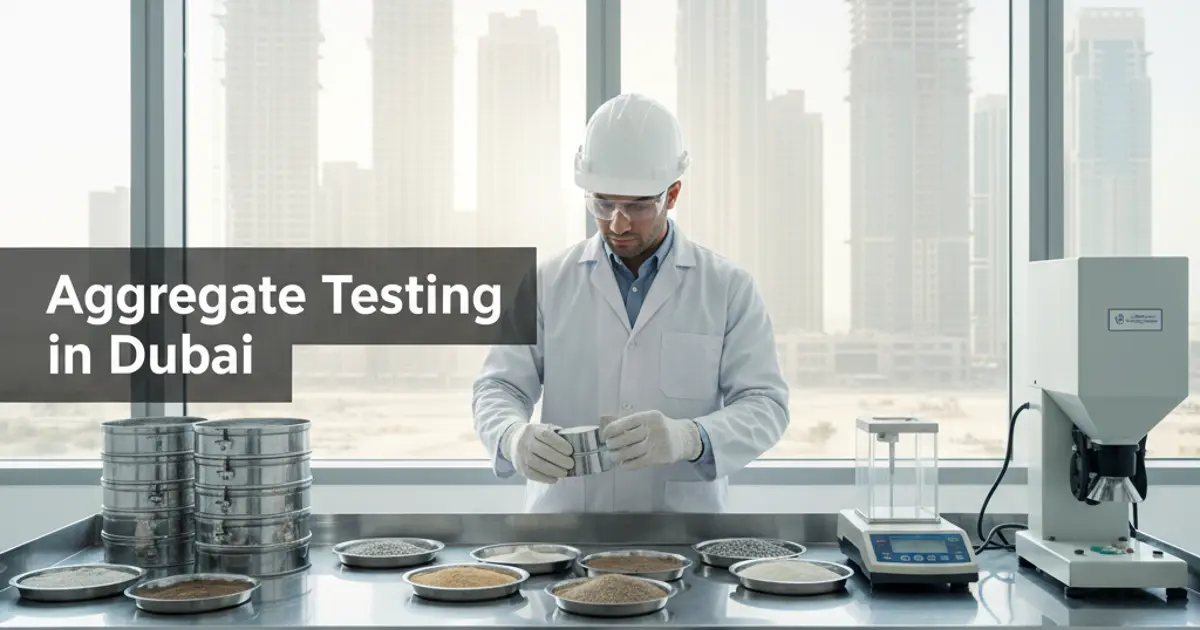
Aggregate testing in Dubai is one of the most overlooked yet essential steps in construction quality assurance. Aggregates form the backbone of concrete, asphalt, and structural fills, and their quality directly determines the strength and durability of any structure. Whether you are managing a high-rise development, a road network, or an industrial facility, understanding how aggregate quality checks work can save your project from costly failures and compliance issues. This blog walks you through the critical role of aggregate testing and why it must be a non-negotiable part of your construction workflow.
Key Takeaways
- Aggregate testing in Dubai ensures construction materials meet structural and regulatory standards before use on-site.
- Testing aggregates in combination with concrete testing Dubai services provides a comprehensive quality assurance framework for any project.
- Working with an EIAC-accredited laboratory guarantees that your results are recognised by Dubai’s regulatory authorities.
- Water testing lab Dubai services complement aggregate and concrete testing by verifying that mixing water meets quality standards.
What Are Aggregates and Why Do They Matter in Construction?
Aggregates are granular materials such as sand, gravel, crushed stone, and recycled concrete that are used as the primary structural components in concrete, asphalt, and base layers. They typically make up 60 to 80 percent of the total volume of concrete, which means their quality has a direct and measurable impact on structural performance. Poor-quality aggregates can introduce weaknesses, increase porosity, and reduce load-bearing capacity in finished structures.
In Dubai’s construction environment, where projects face extreme heat, high humidity, and aggressive ground conditions, the standards for aggregate quality are particularly stringent. The Dubai Municipality enforces strict material testing requirements for all construction projects. Aggregates must meet specific grading, shape, durability, and chemical composition requirements before they are approved for use. Skipping this step or relying on unaccredited test results can result in project delays, rejection by regulatory authorities, or structural non-compliance.
Core Tests Conducted During Aggregate Testing in Dubai
A thorough aggregate testing program covers several key parameters that together define the suitability of the material for its intended use. Each test targets a specific physical or chemical property that influences structural behaviour.
- Particle Size Distribution (Sieve Analysis): Determines the grading of aggregate particles, which affects workability and strength of the final concrete mix.
- Los Angeles Abrasion Test: Measures the hardness and resistance of aggregates to wear and degradation under mechanical action.
- Flakiness and Elongation Index: Assesses particle shape, since flat and elongated particles reduce the workability and compressive strength of concrete.
- Specific Gravity and Water Absorption: Determines how dense and porous the aggregate is, which influences mix design and long-term durability.
- Soundness Test: Evaluates the resistance of aggregates to weathering and chemical attack over time.
- Chloride and Sulphate Content: Checks for harmful chemical compounds that can corrode steel reinforcement and degrade concrete over time.
- Organic Impurities Test: Identifies the presence of organic materials that interfere with cement hydration and reduce bond strength.
Each of these tests must be performed in a controlled laboratory environment by qualified technicians using calibrated equipment. Terrasearch Gulf provides a complete construction material testing service that covers all these parameters with full EIAC accreditation.
How Concrete Testing Dubai Services Complement Aggregate Checks
Aggregate quality does not exist in isolation. Once aggregates are incorporated into a concrete mix, the overall performance of that mix depends on how well all components work together. This is why concrete testing Dubai services are a natural and necessary extension of aggregate testing. Concrete tests verify that the finished mix achieves the specified strength, durability, and workability required by the project design.
Standard concrete tests include compressive strength testing on cube specimens at 7-day and 28-day intervals, slump tests for workability, and water-cement ratio verification. If aggregate quality is compromised, these concrete tests will reveal the problem through below-specification results. By combining aggregate and concrete testing within the same accredited laboratory workflow, construction teams can identify issues at the earliest stage and make informed adjustments to the mix design before large volumes of concrete are poured. Terrasearch Gulf delivers integrated testing services across multiple material disciplines to support this connected quality assurance process. Learn more about the full range of available services by visiting the geotechnical laboratory page for an overview of related capabilities.
The Role of a Water Testing Lab Dubai in Construction Quality
Water is a critical ingredient in concrete production, and its quality is just as important as the quality of aggregates and cement. Impurities in mixing water can affect the hydration of cement, reduce concrete strength, and cause long-term deterioration of reinforced structures. A dedicated water testing lab Dubai service analyses mixing water for parameters such as pH, chloride content, sulphate content, dissolved solids, and organic matter.
In Dubai, the use of desalinated water, recycled water, or groundwater in construction is common due to the region’s limited freshwater resources. Each of these water sources carries specific risks that must be assessed through laboratory testing. Water that contains high chloride levels, for example, can accelerate corrosion of steel reinforcement bars embedded within concrete structures. Terrasearch Gulf’s chemistry laboratory provides water testing lab Dubai services to ensure that your mixing water meets the standards specified in BS EN 1008 and local regulatory guidelines, protecting the long-term integrity of your structures.
Why EIAC Accreditation Matters for Aggregate Testing Results
In Dubai’s construction regulatory framework, test results are only accepted by authorities if they come from an EIAC-accredited laboratory. EIAC stands for Emirates International Accreditation Centre, and accreditation from this body signals that a laboratory meets internationally recognised standards for technical competence, equipment calibration, and result accuracy.
Submitting test reports from a non-accredited laboratory to Dubai Municipality, Trakhees, or other regulatory bodies will result in the rejection of those reports, forcing retesting and causing project delays. For construction companies managing tight timelines and strict compliance requirements, this is a risk that must be avoided. Terrasearch Gulf holds EIAC accreditation, which means that every aggregate test report, concrete test certificate, and water analysis result issued by the laboratory is fully recognised and accepted by Dubai’s regulatory authorities. This removes uncertainty from the compliance process and gives project teams documented confidence in their material quality decisions.
When Should You Schedule Aggregate Testing for Your Project?
Aggregate testing should be scheduled at multiple stages of a construction project rather than treated as a single one-time check. The most effective approach integrates testing into the procurement and construction workflow in a structured manner.
- Pre-procurement stage: Test aggregate samples from proposed suppliers before committing to bulk purchases. This ensures you select a source that consistently meets specifications.
- On delivery: Test each batch of aggregates as it arrives on-site to verify that the delivered material matches the approved source sample.
- During construction: Conduct periodic retesting during the construction phase to monitor consistency, especially for large and long-duration projects.
- When switching suppliers: Any change in aggregate source requires a fresh round of testing to re-establish conformance with project specifications.
Establishing a structured testing schedule with a trusted laboratory partner reduces the risk of substandard materials entering the construction process and provides a clear documented trail for quality assurance audits.
Conclusion
Quality construction in Dubai starts with quality materials, and quality materials start with rigorous testing. Aggregate testing in Dubai is not simply a regulatory requirement but a practical safeguard that protects structural integrity, minimises long-term maintenance costs, and ensures compliance with Dubai’s construction standards. When aggregate testing is combined with concrete testing and water testing services, the result is a comprehensive quality assurance programme that gives every project a strong and verified foundation. Terrasearch Gulf offers EIAC-accredited testing services across all these disciplines, supporting construction teams, contractors, and developers across Dubai. Contact Terrasearch Gulf today to discuss your project’s testing requirements and establish a quality assurance plan that meets regulatory standards from the ground up.
Frequently Asked Questions
What is aggregate testing and why is it required in Dubai?
Aggregate testing evaluates the physical and chemical properties of construction aggregates such as sand, gravel, and crushed stone. In Dubai, it is required to ensure materials meet regulatory and structural standards before use on construction projects.
Which tests are included in a standard aggregate testing program?
A standard program includes sieve analysis, Los Angeles abrasion test, flakiness index, specific gravity, water absorption, soundness, chloride content, sulphate content, and organic impurities testing. Each test assesses a specific property that affects structural performance.
How does aggregate testing relate to concrete testing in Dubai?
Aggregates form the bulk of any concrete mix. Concrete testing Dubai services verify the final mix performance, while aggregate testing checks the raw materials. Both are necessary for a complete quality assurance process.
Why is EIAC accreditation important for a testing laboratory in Dubai?
EIAC accreditation confirms that a laboratory meets international standards for technical competence and accuracy. Dubai’s regulatory authorities, including Dubai Municipality, only accept test reports from EIAC-accredited laboratories, making accreditation essential for project compliance.
How often should aggregates be tested during a construction project?
Aggregates should be tested before procurement, on each delivery, periodically during construction, and whenever the supplier changes. Regular testing at multiple stages ensures consistent material quality throughout the project duration and supports regulatory compliance.
Can the same laboratory handle both aggregate and concrete testing in Dubai?
Yes. An accredited laboratory like Terrasearch Gulf offers integrated services that cover aggregate testing, concrete cube testing, and water analysis. Using one laboratory for all material tests simplifies reporting and supports a consistent quality assurance workflow.
What happens if aggregates fail quality testing in Dubai?
Failed aggregates must be rejected and replaced with materials from an approved source. The construction team must retest a new batch before use. Using failed aggregates without retesting can result in project non-compliance, regulatory rejection, and potential structural issues.
Is aggregate testing required for all types of construction projects in Dubai?
Aggregate testing is required for all projects where aggregates are used in concrete, asphalt, or structural fills. This includes residential, commercial, industrial, and infrastructure projects. Regulatory authorities require test documentation as part of material approval submissions.
How do I submit aggregate test results to Dubai regulatory authorities?
Test results must be submitted as formal laboratory reports issued by an EIAC-accredited facility. Reports must reference applicable standards such as BS or ASTM. Ensure your laboratory provides properly formatted documentation that satisfies authority submission requirements for your specific project type.
What does a water testing lab in Dubai check for in construction water?
A water testing lab Dubai checks pH levels, chloride content, sulphate content, dissolved solids, and organic matter. These parameters determine whether mixing water is safe for use in concrete and will not degrade structural integrity.