

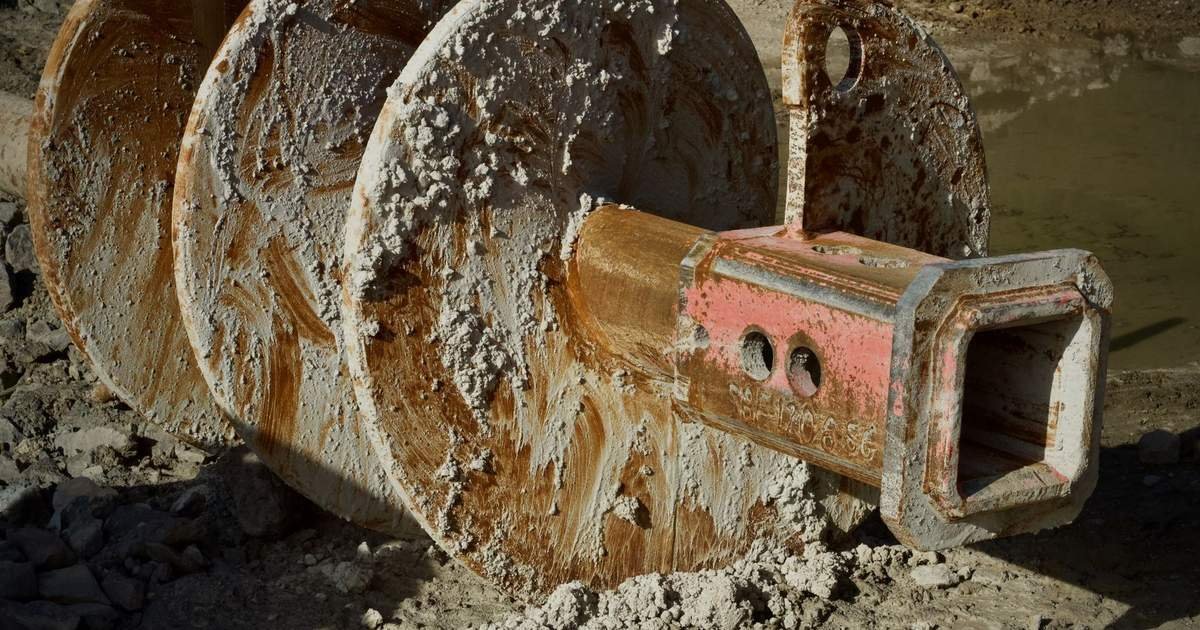
Every bored pile in the UAE is cast blind, below ground, where nobody can watch the concrete settle. A pile integrity test in the UAE is the fastest way to check that each shaft came out as designed. This guide explains how low strain testing works, the defects it finds reliably, and the limits that catch contractors out. It also covers how to plan pile integrity testing on Dubai sites, and when to escalate to the other methods described in our guide to verifying foundation design assumptions.
Key Takeaways
- A pile integrity test in the UAE is usually a quick low strain pile test that checks shaft continuity, not load capacity.
- PIT reliably finds major necks, voids, inclusions and cracks in the upper shaft, but sensitivity falls with depth and soil friction.
- Pair PIT test Dubai results with cross hole sonic logging or load testing when a reflection is unclear or the pile is critical.
What a Pile Integrity Test Actually Measures
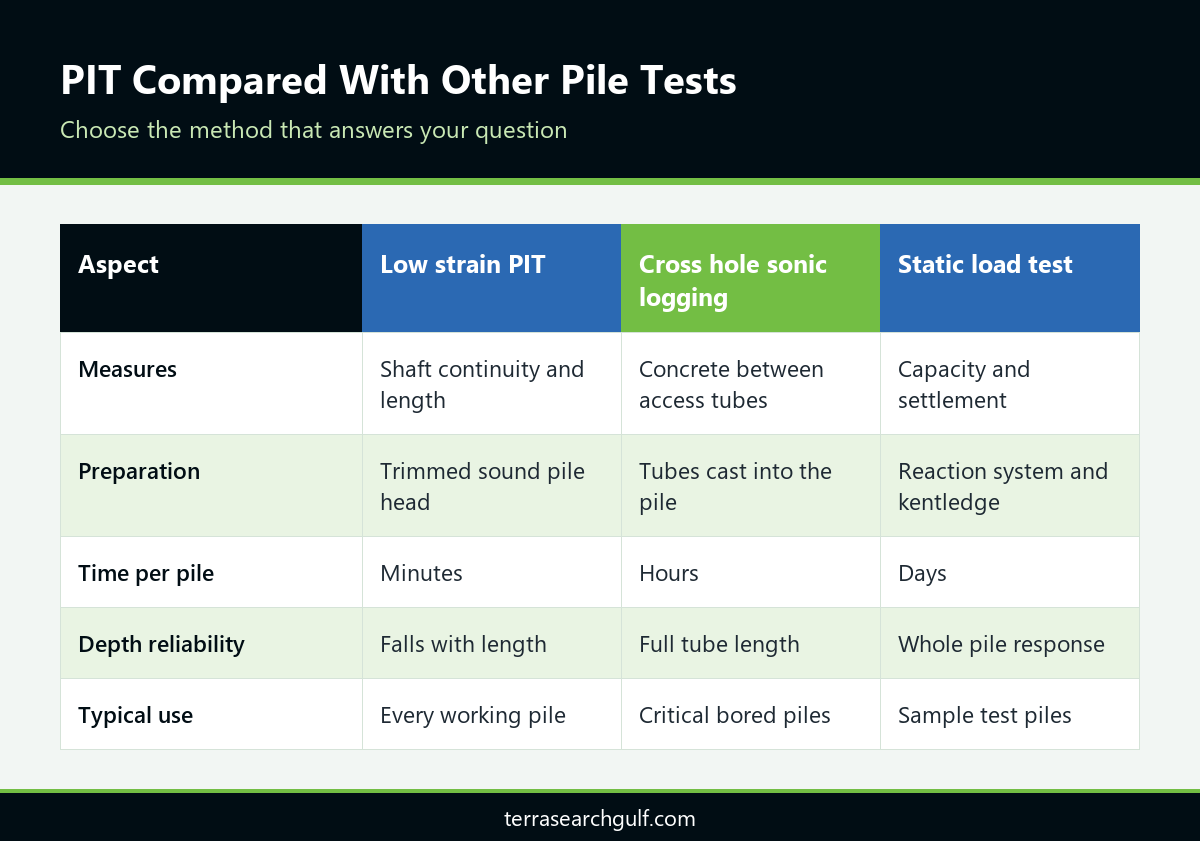
A pile integrity test in the UAE sends a small stress wave down the pile and listens for echoes. The test reads changes in impedance, which reflect changes in cross section or concrete quality. It says nothing directly about bearing capacity, so it answers a different question from a static load test on site.
The method is often called the sonic echo or low strain pile test. A technician trims the pile head to sound concrete, fixes an accelerometer to the surface and strikes the head with a small handheld hammer. The sensor records the velocity of the head as the wave travels down and returns from the toe. Software plots this velocity against depth using an assumed wave speed for the concrete. A clean pile shows one strong reflection at the toe. A change in section, such as a neck or a bulge, creates an earlier reflection whose direction shows whether the section shrank or grew. The procedure is standardised in ASTM D5882 for low strain impact integrity testing, which most specifications for a pile integrity test in the UAE reference.
Because each test takes only a few minutes, a crew can cover dozens of piles in a day. That speed is why PIT is often specified for every working pile on a project, while slower and more expensive methods are reserved for a sample. The overview of integrity testing theory gives a useful summary of the wave physics for readers who want more depth.
What Low Strain PIT Detects Well
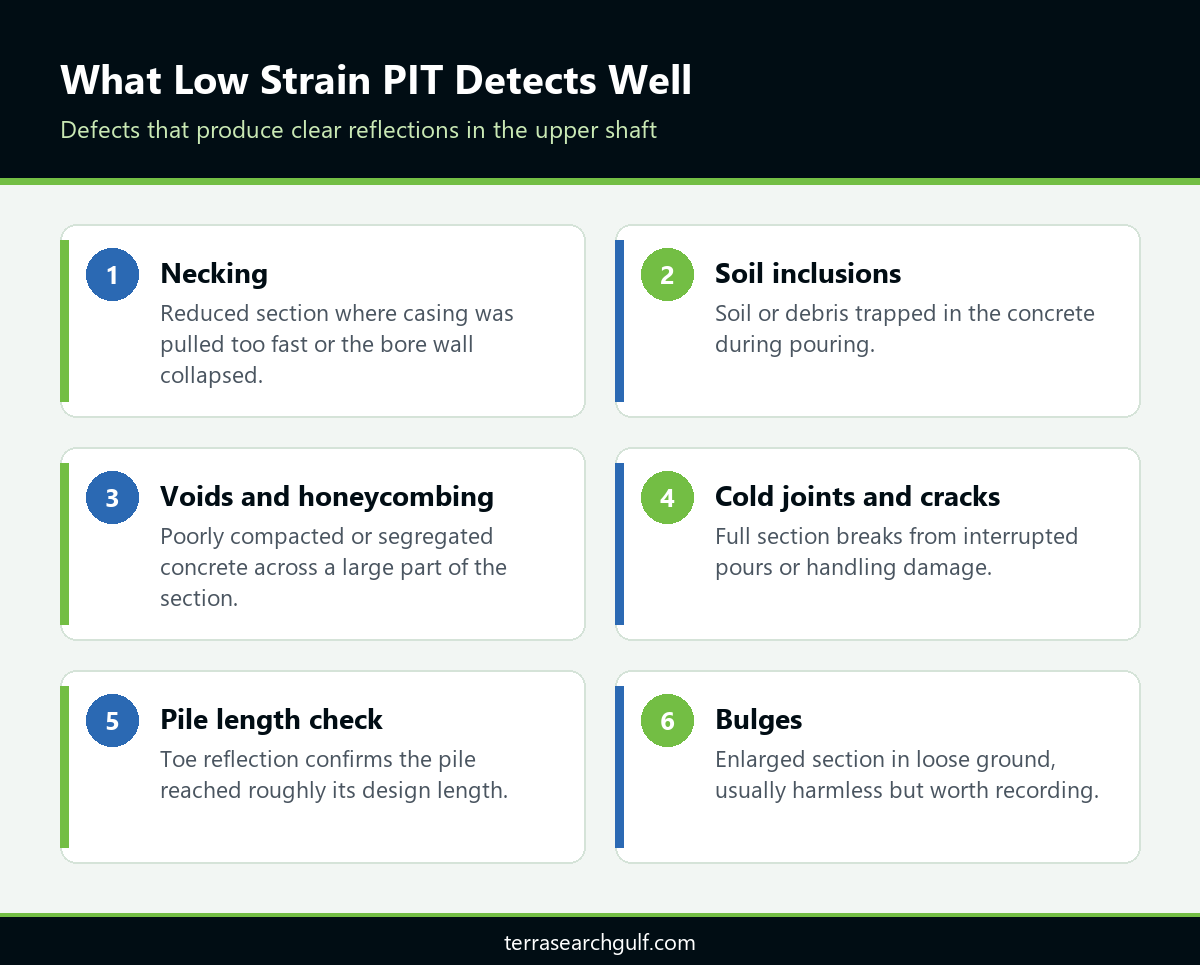
Low strain testing is very good at finding large, abrupt changes in the shaft. Major necking, soil inclusions, voids, cold joints and cracks across the full section all produce clear reflections. Detection is strongest in the upper part of the pile, where the wave is still strong and soil damping is low.
On Dubai sites, common findings include necking where a casing was withdrawn too fast, soil intrusion where groundwater softened the bore wall, and poor concrete at the head from laitance or contamination. Each produces a recognisable signature. A sharp drop in impedance followed by recovery usually points to a neck or inclusion. An increase suggests a bulge, which is common in loose sand and rarely harmful. A reliable pile integrity test in the UAE will also confirm the approximate pile length, which helps spot piles that were cut short or never reached the design toe level.
PIT is also a practical screening tool across a whole site. When results are compared pile by pile, an outlier stands out quickly, even if its signal is not dramatic on its own. That pattern view is often more useful than any single trace. It lets the consultant direct follow up testing at the piles that look different, instead of spreading effort evenly across sound piles.
The Limits: What PIT Cannot Tell You
Every pile integrity test in the UAE has blind spots, and a clean result is not a guarantee. Small or gradual defects, defects near the toe of long piles, and anything below a major defect can be missed. The test also cannot measure capacity, settlement or the quality of the bond between the pile and the ground.
Sensitivity falls as the wave travels deeper. Skin friction in dense sand and weak rock absorbs energy, so reflections from the lower shaft become faint. Results often become unreliable once the length to diameter ratio grows large, frequently somewhere around 30, although the limit depends on the soil. Every report for a pile integrity test in the UAE should state the depth to which the signal was interpretable. If it does not, ask. The test also struggles with piles that change section by design, such as those with enlarged bases or permanent casings, because every planned change creates a reflection that can mask a defect.
Finally, PIT cannot see below the first major defect, because most of the energy reflects back from it. It also needs access to the pile head before caps are cast. Once the head is buried in a cap or slab, retesting is difficult. That is why the timing of each pile integrity test in the UAE matters as much as the method itself.
Planning PIT on Dubai Sites
A good pile integrity test in the UAE starts before the hammer touches the pile. Testing needs a sound, trimmed head, concrete of adequate age and a clear record of each pile’s as built details. Planning those points with the piling contractor avoids inconclusive traces and costly retests later in the pile testing Dubai programme.
Concrete should be old enough for a stable wave speed, and the specification will set the minimum age. Heads must be trimmed back to sound concrete, cleaned of laitance and ground flat at the sensor and hammer points. Ask the piling contractor for the as built length, diameter, casing details and any concreting incidents for each pile. These records let the analyst separate design changes from defects. On sites with high groundwater, which is common across coastal Dubai, note any pumping or casing problems during construction, as these often explain anomalies. A well planned testing schedule checks each batch as soon as heads are ready, so problems surface before the next piles are bored.
Choose a laboratory accredited for the method and familiar with local ground. Results feed directly into acceptance decisions, so the analyst’s experience matters. Our structural testing and analysis team carries out pile integrity testing Dubai contractors schedule alongside other foundation checks.
Agree the reporting format before testing starts. A useful report for a pile integrity test in the UAE shows each trace, the assumed wave speed, the interpretable depth and a clear category for every pile. It should also flag piles that need follow up, with reasons. Agreeing this upfront means the consultant can approve or query piles within days, rather than waiting for a full site report. Fast feedback keeps the piling rig productive and stops a repeated construction fault spreading across the site. On larger projects, a short daily summary of test results helps the site team plan trimming, retests and cap pours with confidence.
Reading the Report and Deciding Next Steps
A PIT report usually classifies each pile into simple categories, such as clear, anomaly or inconclusive. The category is a starting point for a decision, not the decision itself. What matters is how the anomaly relates to the pile’s role, its loading and the evidence from other tests.
Where a reflection is minor and near the head, the fix may be as simple as trimming further and retesting. Where it sits deeper or looks significant, consultants often call for coring, sonic logging between access tubes or a load test to confirm whether the pile can carry its design load. Some anomalies prove harmless after review, especially bulges. Others lead to a remedial design, such as extra piles or a stiffer cap. Treat the result of each pile integrity test in the UAE as evidence to be weighed, and keep it with the concrete test records for the same pours. Wider guidance on combining methods is in our article on non destructive testing methods and applications.
Conclusion
Low strain PIT is a fast, affordable way to screen every pile on a project, and it finds large defects in the upper shaft reliably. It cannot measure capacity, it weakens with depth, and it cannot see below a major defect. Use each pile integrity test in the UAE as a screening signal, then confirm doubtful piles with stronger methods before caps are cast. Terrasearch Gulf has completed 342+ projects from its EIAC accredited laboratory in Dubai. Speak to our foundation testing engineers to plan your next pile testing programme.
Frequently Asked Questions
What is a pile integrity test in the UAE?
It is a low strain test that sends a small stress wave down a cast pile and records the echoes. Changes in the reflected signal reveal necks, bulges, voids or cracks along the shaft, without measuring load capacity.
How long does a PIT test take on site?
Each pile usually takes only a few minutes once the head is trimmed and clean. A trained crew can test dozens of piles in a single day, which is why the method suits screening every working pile.
Can low strain testing measure pile capacity?
No. Low strain testing checks shaft continuity and approximate length only. Capacity and settlement need a static load test or a high strain dynamic test, which apply much larger forces and measure the pile response to load.
How old must the concrete be before testing?
The project specification sets the minimum age, commonly several days after casting. Testing too early gives an unstable wave speed and unclear traces, so confirm the curing period with the consultant before mobilising the test crew.
Why are long piles harder to assess with PIT?
Soil friction absorbs wave energy as it travels down the shaft. In long piles with high length to diameter ratios, reflections from the lower section become faint, so small defects near the toe can be missed entirely.
What happens if a pile shows an anomaly?
The consultant reviews the trace with the pile records. Minor head defects may be trimmed and retested. Deeper or larger anomalies usually lead to coring, sonic logging or a load test before any remedial design is agreed.
Is PIT suitable for driven precast piles?
Yes. Low strain testing works on driven precast piles as well as bored piles. It helps spot cracks caused by handling or hard driving, although joints between pile segments create reflections that need careful interpretation by the analyst.
Who should carry out pile integrity testing?
Use a laboratory accredited for the method and experienced with local ground. Our guide to how EIAC accreditation and approvals work explains what accreditation covers and how to confirm the test sits within the lab’s scope.
Should PIT sit within a wider ground investigation plan?
Yes. Ground data explains many anomalies, such as soft layers or high groundwater at certain depths. Our geotechnical investigation services provide the soil and rock profile that makes integrity results far easier to interpret.