

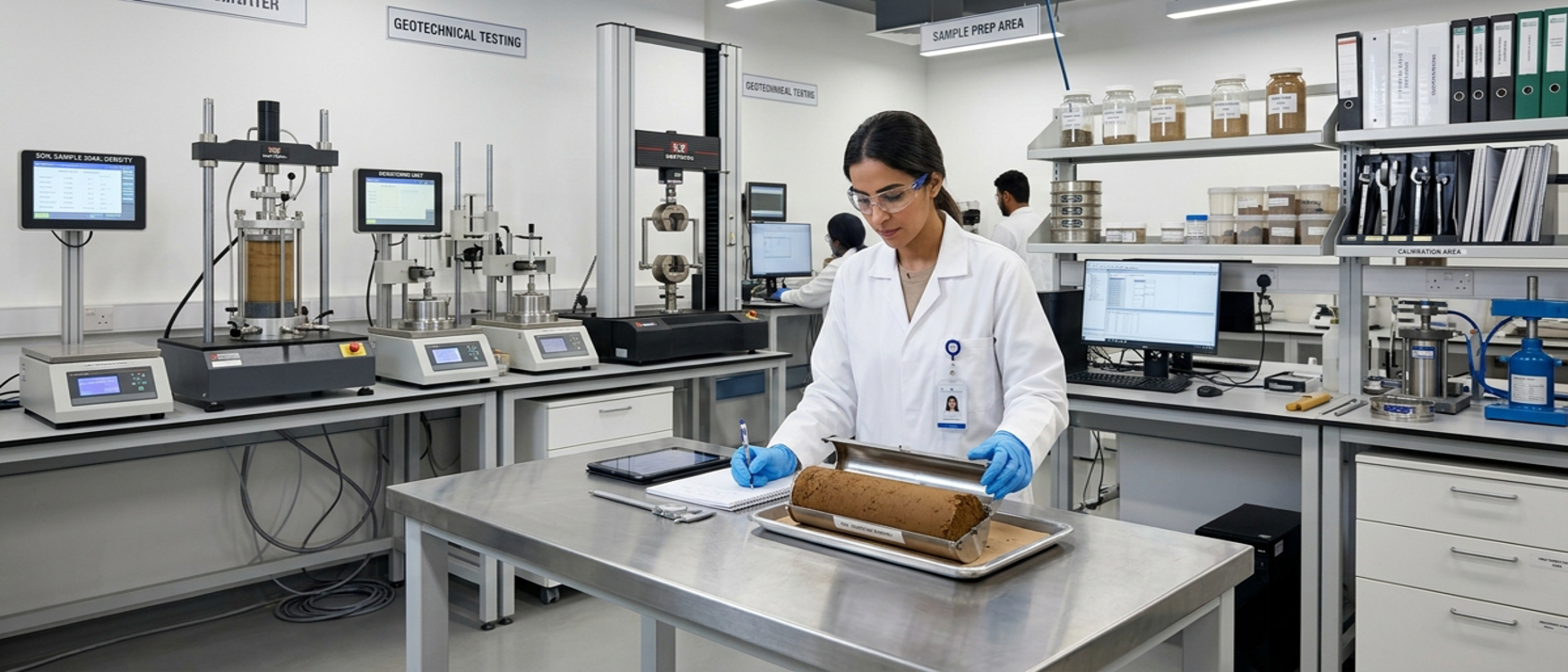
Soil testing laboratory in Dubai services are a critical first step for any construction or infrastructure project in the UAE. Before a single foundation is poured, the ground beneath must be thoroughly understood. Selecting the wrong laboratory can lead to inaccurate soil reports, structural risks, and costly regulatory setbacks. This blog walks you through the most important factors to evaluate when choosing a soil testing lab in Dubai, so your project starts on solid ground.
Key Takeaways
- Always verify that the soil testing laboratory holds valid EIAC accreditation before commissioning any tests.
- The right soil testing lab in Dubai should offer comprehensive geotechnical services including borehole drilling, soil analysis, and foundation assessment.
- Laboratory experience, turnaround time, and report quality are equally important as technical capability when making your selection.
Why Choosing the Right Soil Testing Laboratory in Dubai Matters
The quality of soil analysis directly influences foundation design, structural integrity, and long-term project durability. A reliable soil testing laboratory in Dubai provides accurate data that engineers use to make informed design decisions. Without precise soil reports, projects face risks such as settlement, subsurface instability, and compliance failures with Dubai Municipality and other regulatory bodies.
Dubai’s diverse terrain includes sandy desert soils, sabkha (salt-affected ground), and reclaimed land. Each of these presents unique geotechnical challenges. A qualified laboratory understands local soil conditions and applies the right testing protocols to address them effectively.
According to Dubai Municipality guidelines, geotechnical investigations and soil testing reports are often mandatory before building permit approvals are issued. Working with an accredited and experienced lab ensures your reports meet these regulatory standards from the start.
Key Factors to Evaluate in a Soil Testing Lab in Dubai
1.1.1. Verify EIAC Accreditation and Regulatory Compliance
Accreditation is the single most important criterion when selecting a soil testing laboratory in Dubai. The Emirates International Accreditation Centre (EIAC) accredits laboratories that meet internationally recognized standards for testing competence and quality management. Reports from EIAC-accredited labs are accepted by Dubai Municipality, road and transport authorities, and other government bodies.
Always request the laboratory’s accreditation certificate and verify its current validity. An accredited lab operates under documented procedures, uses calibrated equipment, and maintains traceable results. This protects your project from report rejections and regulatory delays. Geotechnical investigation services from an EIAC-accredited provider give you confidence that all results meet the required technical standards.
1.1.2. Assess the Range of Geotechnical Testing Services Offered
A comprehensive soil testing lab in Dubai should offer far more than basic soil classification. Look for a laboratory that provides borehole drilling, in-situ testing, soil analysis, groundwater assessment, and detailed geotechnical reporting. The broader the service range, the more efficiently the lab can support your project without requiring multiple vendors.
Key geotechnical services to look for include:
- Borehole drilling and soil sampling
- Standard Penetration Tests (SPT)
- Grain size analysis and Atterberg limits testing
- Consolidation and shear strength testing
- Chemical analysis of soil and groundwater
- Foundation assessment and bearing capacity evaluation
Laboratories offering plate load testing in Dubai alongside standard soil tests provide added value for verifying actual soil bearing capacity on site, which is particularly important for heavy infrastructure projects.
1.1.3. Review Laboratory Equipment, Technology, and Methodologies
Modern testing equipment and up-to-date methodologies directly impact the accuracy of your soil analysis. A qualified soil testing laboratory in Dubai should use calibrated instruments that comply with ASTM, BS, or EN standards. Ask about the lab’s equipment maintenance schedules and calibration records before placing any orders.
Laboratories that also integrate geophysical investigation techniques provide a more complete picture of subsurface conditions. Understanding what lies beneath your site before drilling begins can save considerable time and cost. You can learn more about geophysical survey services in Dubai and how they complement traditional soil investigation. Testing methodologies should align with project specifications, local regulations, and international standards simultaneously.
1.1.4. Evaluate Experience, Industry Track Record, and Local Knowledge
Experience in the Dubai and UAE construction market is a significant differentiator when choosing a soil testing lab in Dubai. Laboratories with a strong track record understand local soil profiles, regulatory expectations, and the pace at which construction projects move in the emirate. Ask for case studies, references, or examples of completed geotechnical investigations in similar project types.
Local knowledge also includes familiarity with Dubai’s sabkha formations, high groundwater tables in coastal zones, and the sulfate content levels common in UAE soils. A laboratory that has encountered and addressed these conditions before will produce more reliable and project-specific recommendations. Newer labs without local experience may apply generic testing protocols that miss critical site-specific risks.
1.1.5. Consider Report Quality, Turnaround Time, and Technical Support
The final deliverable from a soil testing laboratory in Dubai is the geotechnical investigation report. This document must be clear, technically sound, and formatted to meet the requirements of your consultant and regulatory authority. Review sample reports before selecting a laboratory to assess the depth of interpretation, clarity of data presentation, and overall professional quality.
Turnaround time is equally important, especially in fast-moving construction environments. Confirm the lab’s standard and expedited timelines for report delivery. Also assess the level of technical support offered after report submission. A capable laboratory should have qualified geotechnical engineers who can answer questions, clarify findings, and support your design team if needed. This kind of ongoing technical partnership adds real value beyond just the test results.
Additional Considerations When Selecting a Soil Testing Lab
Beyond the five core factors above, there are several additional considerations that can help you make a more confident decision.
- Insurance and liability coverage: Confirm the lab carries professional indemnity insurance relevant to geotechnical services.
- Health, safety, and environmental compliance: Field investigation work involves drilling and site activities that must meet UAE HSE standards.
- Client communication and project management: Responsive project managers and clear communication channels reduce delays and misunderstandings.
- Integrated material testing capability: Many projects require soil testing alongside construction materials testing services for concrete, aggregates, and other site materials. A lab that offers both reduces coordination complexity.
It is also worth reviewing whether the laboratory has experience with specialized or large-scale projects such as road construction, marine works, or high-rise residential developments. These project types often require additional testing protocols and higher levels of reporting detail.
According to the Trakhees regulatory authority in Dubai, geotechnical reports submitted for development approvals must meet specific technical content requirements. Choosing a lab familiar with these submission standards avoids rework and approval delays.
Conclusion
Selecting the right soil testing laboratory in Dubai is not a decision to make lightly. Accreditation, service range, equipment standards, local experience, and report quality are the five pillars of a reliable geotechnical testing partner. A laboratory that meets all these criteria will provide accurate, compliant, and actionable soil data that protects your project from foundation to finish. If you are planning a construction or infrastructure project in Dubai or across the UAE, contact Terrasearch Gulf to discuss your geotechnical investigation requirements with an EIAC-accredited team you can trust.
FAQ
Q1: What is the role of a soil testing laboratory in a construction project?
A soil testing laboratory in Dubai analyses subsurface conditions to help engineers design safe foundations. Accurate soil data determines bearing capacity, settlement risk, and groundwater levels, all of which directly influence structural design decisions for any construction or infrastructure project.
Q2: Why is EIAC accreditation important for a soil testing lab in Dubai?
EIAC accreditation confirms that a soil testing lab in Dubai meets internationally recognized standards for testing quality, equipment calibration, and documented procedures. Reports from EIAC-accredited laboratories are accepted by Dubai Municipality and other regulatory authorities, reducing the risk of report rejection or project delays.
Q3: What types of tests does a soil testing laboratory typically conduct?
A qualified laboratory typically performs borehole drilling, Standard Penetration Tests, grain size analysis, Atterberg limits, consolidation testing, shear strength tests, and chemical analysis of soil and groundwater. These tests collectively provide a comprehensive geotechnical profile of the site for engineering use.
Q4: How do I verify if a soil testing laboratory in Dubai is accredited?
You can request the laboratory’s current EIAC accreditation certificate directly or check the EIAC official directory. Verify that the certificate is active, covers the specific tests you require, and has not expired. Always confirm accreditation before signing any testing agreement.
Q5: What is the typical turnaround time for a soil testing report in Dubai?
Turnaround time varies based on project scope and the number of boreholes. Standard geotechnical investigation reports in Dubai generally take between 5 and 15 working days after fieldwork is complete. Expedited services may be available depending on the laboratory’s capacity and project urgency.
Q6: What is sabkha soil and why does it matter for construction in Dubai?
Sabkha is salt-affected ground common in coastal UAE areas. It is highly compressible, prone to collapse when wetted, and chemically aggressive toward concrete and steel. Identifying sabkha early through proper geotechnical investigation services allows engineers to design appropriate foundation solutions before construction begins.
Q7: Can a soil testing lab also perform water testing for construction sites?
Yes, many accredited laboratories offer water testing alongside soil investigation. Groundwater chemical analysis is essential for understanding sulfate and chloride content that can affect concrete durability. Laboratories offering both services, such as those also providing water testing in Dubai, simplify project coordination significantly.
Q8: What standards do soil testing laboratories in Dubai follow?
Most accredited laboratories in Dubai follow ASTM International standards, British Standards (BS), and Eurocode methods for geotechnical testing. Some tests also align with Dubai Municipality and UAE-specific regulatory guidelines. Always confirm which standards the laboratory applies before commissioning a geotechnical investigation.
Q9: Is a geotechnical report mandatory before obtaining a building permit in Dubai?
Yes, geotechnical investigation reports are typically required by Dubai Municipality before building permits are issued for most construction projects. The report must meet specific technical content requirements. Working with an experienced soil testing laboratory in Dubai ensures your submission meets all regulatory expectations without revision delays.
Q10: What should I look for in a geotechnical investigation report from a soil lab?
A high-quality report should include borehole logs, laboratory test results, groundwater data, soil classification, and clear engineering recommendations. It should reference the applicable standards used and be signed by a qualified geotechnical engineer. Review the foundation assessment approach described to ensure it suits your project scope.