

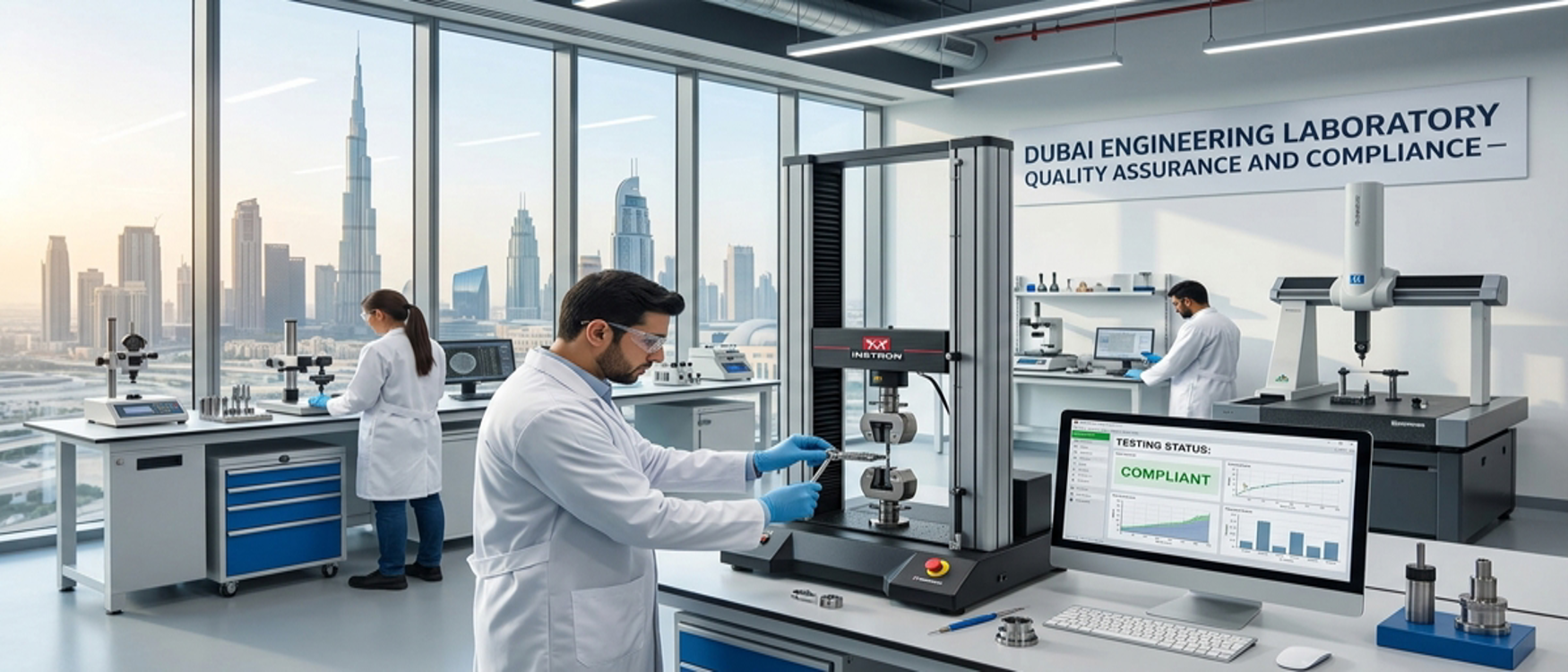
Why Engineering Labs in Dubai Are Essential for Quality Assurance and Regulatory Compliance
Engineering labs in Dubai play a critical role in ensuring that construction and infrastructure projects meet the highest standards of quality and safety. As Dubai continues to develop at an extraordinary pace, the need for precise material testing, geotechnical investigation, and regulatory compliance support has never been greater. This blog explores why accredited engineering testing laboratory Dubai services are indispensable for developers, contractors, and project managers operating in the UAE construction sector.
Key Takeaways
- Engineering labs in Dubai provide the testing and verification services needed to meet UAE regulatory and safety standards across all construction phases.
- An accredited engineering testing laboratory Dubai ensures that materials, soil, structural components, and water meet defined quality benchmarks before and during construction.
- EIAC-accredited labs like Terrasearch Gulf offer geotechnical investigation, construction material testing, non-destructive testing, and more to support full project compliance.
What Do Engineering Labs in Dubai Actually Do?
An engineering lab in Dubai is a specialized facility that performs scientific and technical testing on construction materials, soil, structural elements, and environmental samples. These laboratories apply standardized test methods to verify that materials perform as required by engineering specifications and local building regulations.
From testing concrete compressive strength to analyzing soil bearing capacity, engineering labs in Dubai provide the data engineers and project managers need to make confident decisions. The scope of services typically includes construction materials testing services, geotechnical investigation, structural analysis, steel and NDT services, and chemistry laboratory testing.
These services are not optional. Dubai Municipality, the Abu Dhabi Department of Municipalities and Transport, and other regulatory bodies require accredited laboratory testing at multiple stages of a construction project. Without verified test results from a recognized lab, project approvals and handovers can be delayed or refused.
The Role of EIAC Accreditation in Engineering Testing Laboratory Dubai Services
Not all testing laboratories in Dubai carry the same credibility. EIAC accreditation from the Emirates International Accreditation Centre is the benchmark for laboratory competence in the UAE. It confirms that a laboratory operates according to ISO/IEC 17025 standards, which govern the technical competence and management systems of testing laboratories.
When a project relies on an EIAC-accredited engineering testing laboratory Dubai facility, the test results are recognized by government authorities, consultants, and project owners. This directly supports regulatory submissions and quality certification processes. Terrasearch Gulf holds EIAC accreditation, ensuring its test reports are accepted across Dubai’s demanding construction regulatory environment.
Choosing an accredited lab also reduces risk. If test data is disputed during a project audit or legal proceeding, reports from an EIAC-accredited laboratory carry formal technical authority. You can learn more about EIAC accreditation standards at www.eiac.ae, the official body governing accreditation in the UAE.
Geotechnical Investigation: The Foundation of Structural Safety
Before a single foundation is poured, the ground beneath a site must be fully understood. Engineering labs in Dubai provide geotechnical investigation services that include borehole drilling, soil sampling, laboratory soil analysis, and foundation assessment. These services identify soil type, bearing capacity, settlement potential, and groundwater conditions.
This data directly informs foundation design decisions. Inadequate site investigation is one of the most common causes of structural complications in construction projects. A thorough geotechnical investigation in the UAE eliminates guesswork and ensures that foundation systems are designed for actual site conditions rather than assumed ones.
Field testing such as plate load testing in Dubai verifies soil bearing capacity directly on site. These on-site tests complement laboratory analysis and provide project teams with real-world performance data before construction proceeds. Together, they form a complete geotechnical picture that supports both design accuracy and regulatory submissions.
Construction Material Testing: Protecting Every Layer of a Project
Once ground conditions are confirmed, the quality of construction materials must be continuously monitored throughout the build. Engineering testing laboratory Dubai services cover every major material category used in modern construction projects.
- Concrete testing: Compression strength, workability, and durability assessments to verify mix design and batch performance. Learn more about concrete testing in Dubai and the standards applied.
- Aggregate testing: Gradation, shape, strength, and contamination checks to confirm suitability for structural concrete and road base applications. Understand how aggregate testing in Dubai protects your construction investment.
- Asphalt testing: Stability, density, and bitumen content analysis for road construction and pavement projects.
- Steel testing: Tensile strength, yield strength, elongation, and bend testing to verify rebar and structural steel performance. Review the scope of steel testing and NDT services in the UAE for a full picture of what is tested.
- Water testing: Chemical and physical analysis of water used in construction mixes or on-site, ensuring compliance with UAE standards.
Each of these material categories has specific UAE regulatory requirements. Failing to test at defined intervals can result in non-compliance notices, rework orders, or project shutdowns. Consistent engagement with a qualified engineering lab in Dubai keeps every layer of a project compliant and documented.
Non-Destructive Testing: Protecting Existing and New Structures
Not all engineering testing requires cutting, breaking, or removing material samples. Non-destructive testing (NDT) allows engineers to assess the condition and integrity of structural elements without causing damage. This is especially valuable for existing structures undergoing renovation or inspection.
Methods used in NDT include ultrasonic pulse velocity testing, rebound hammer testing, cover meter surveys, and radiographic inspection. These techniques reveal internal defects, reinforcement positioning, concrete uniformity, and potential weaknesses that visual inspection alone cannot detect.
For new construction, NDT serves as a final quality verification step before handover. For aging infrastructure, it supports asset management and helps owners understand the true condition of their investments. The scope of non-destructive testing in the UAE covers a wide range of methods and structural applications. The international standard body ASTM International provides globally recognized test methods that many UAE engineering labs, including Terrasearch Gulf, follow for both destructive and non-destructive assessments.
How Engineering Labs Support Regulatory Compliance in Dubai
Dubai’s construction sector is governed by a layered set of regulations, codes, and authority requirements. Dubai Municipality, the Roads and Transport Authority, and various federal bodies all set minimum testing and quality standards that must be met during construction.
An accredited engineering lab in Dubai supports regulatory compliance at every project stage. During design, soil and site investigation data informs planning submissions. During construction, material test reports are submitted to supervising consultants and regulatory inspectors. At handover, final structural and material compliance records are compiled for authority approval.
Terrasearch Gulf, as an EIAC-accredited laboratory, provides the complete documentation chain that projects need. From initial site investigation through to final material certification, every test report is formatted, signed, and accredited to meet authority requirements. This structured compliance support reduces project delays and builds a reliable quality assurance record for every client.
Why Choosing the Right Engineering Lab in Dubai Matters
The quality of your laboratory partner directly affects the reliability of your test data and the credibility of your compliance documentation. When selecting an engineering testing laboratory Dubai partner, look for the following:
- Valid EIAC accreditation covering the specific tests your project requires
- Experienced technical staff with qualifications in geotechnical and materials engineering
- A proven track record with similar project types and scales
- Turnaround times that align with your construction programme
- A full suite of services so one partner can handle multiple testing needs
Working with a laboratory that lacks accreditation or experience in your specific materials creates risk. Test reports may be rejected by consultants or authorities, causing delays and additional costs. Selecting an established, accredited partner from the start protects your programme and your budget.
Conclusion
Engineering labs in Dubai are not simply service providers. They are essential partners in every construction and infrastructure project. From geotechnical investigation and soil testing to concrete, steel, NDT, and water analysis, accredited laboratories provide the verified data that safety and compliance depend on. In Dubai’s regulated and fast-moving construction environment, choosing an EIAC-accredited engineering testing laboratory Dubai partner is a strategic decision that protects your project at every stage. To explore how Terrasearch Gulf can support your next project, visit the Terrasearch Gulf About Us page or reach out to discuss your specific testing requirements.
FAQ
Q1: What services do engineering labs in Dubai typically provide?
Engineering labs in Dubai provide a broad range of services including soil investigation, concrete testing, aggregate analysis, steel testing, non-destructive testing, and water quality analysis. These services support quality assurance and regulatory compliance across all construction project phases in the UAE.
Q2: Why is EIAC accreditation important for an engineering testing laboratory in Dubai?
EIAC accreditation confirms that a laboratory meets ISO/IEC 17025 standards for technical competence. It ensures that test results are recognized by Dubai Municipality, government authorities, and project consultants, making compliance submissions faster and more credible throughout the construction process.
Q3: How does geotechnical investigation support construction project planning?
Geotechnical investigation identifies soil type, bearing capacity, and groundwater conditions before construction begins. This data informs foundation design and eliminates costly assumptions. Terrasearch Gulf’s geotechnical investigation services in the UAE provide the detailed site data needed for accurate structural planning.
Q4: What is non-destructive testing and when is it used in construction?
Non-destructive testing uses methods like ultrasonic pulse velocity and rebound hammer techniques to assess structural integrity without damaging materials. It is used during construction quality checks, pre-handover inspections, and assessment of existing structures requiring renovation or condition evaluation.
Q5: How often should construction materials be tested during a project?
Testing frequency depends on the material type, project scale, and regulatory requirements. Concrete is typically tested per batch or pour. Aggregates and asphalt are tested at defined intervals. Dubai regulatory authorities set minimum testing schedules that accredited material testing laboratories in the UAE help clients follow correctly.
Q6: Can engineering labs in Dubai test both soil and construction materials?
Yes. Full-service engineering labs in Dubai like Terrasearch Gulf offer both geotechnical and construction material testing under one roof. This integrated approach reduces coordination complexity and ensures consistent quality documentation across all aspects of a project from site investigation through to final material certification.
Q7: What types of steel testing are performed by engineering testing laboratories in Dubai?
Engineering testing laboratories in Dubai perform tensile strength, yield strength, elongation, and bend tests on rebar and structural steel. These tests confirm that materials meet UAE and international standards for structural safety, ensuring steel used in buildings and infrastructure performs as required under load.
Q8: Is water testing part of construction quality assurance in the UAE?
Yes. Water used in concrete mixing and on-site construction must meet defined chemical and physical standards. Engineering labs test water for pH, chloride content, sulfate levels, and other parameters. Proper water quality directly affects concrete strength, durability, and long-term structural performance in Dubai’s climate. Learn more at the EIAC-accredited water testing lab in Dubai page.
Q9: How do engineering labs in Dubai help meet Dubai Municipality requirements?
Engineering labs provide accredited test reports that are submitted at key regulatory checkpoints. These reports cover soil investigation, material compliance, and structural performance. Engaging an EIAC-accredited lab ensures documentation meets authority standards, as detailed under the structural testing and analysis services in the UAE offered by Terrasearch Gulf.
Q10: What is plate load testing and why is it important before construction?
Plate load testing is a field test that directly measures the bearing capacity of soil under simulated load conditions. It verifies laboratory findings on-site and confirms that the ground can safely support the planned structure. This test is essential for foundation design validation and regulatory approval in Dubai.