

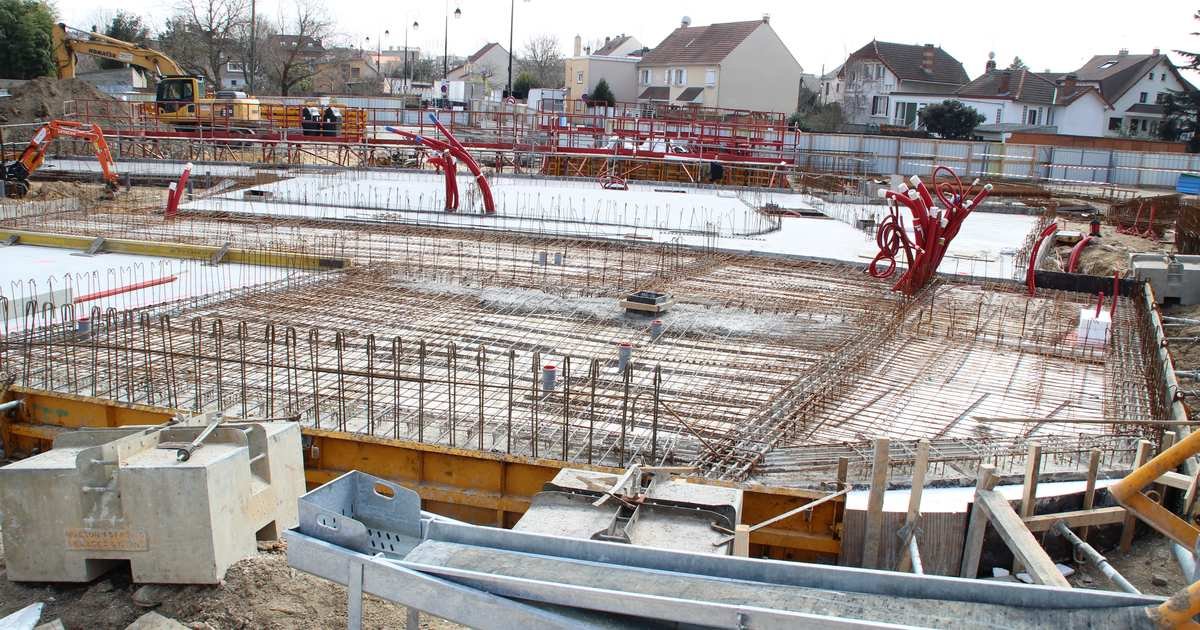
Dubai and the wider UAE sit on ground and groundwater carrying unusually high natural salt content, and that chemistry threatens every reinforced concrete structure built above it. Chloride sulphate testing UAE engineers specify is usually scoped inside broader geotechnical investigation services in UAE contracts, because untreated salt attack destroys concrete durability long before visible cracks appear. Chloride ions corrode steel reinforcement from within, while sulphate ions attack the concrete matrix itself, a risk our complete geotechnical investigation guide covers in more depth. Both processes are silent, slow and expensive to reverse once handover has passed. This guide explains how the testing works, what thresholds engineers rely on, and why it belongs in every UAE project specification.
Key Takeaways
- UAE soils and groundwater often carry chloride and sulphate levels far above international norms, raising corrosion and concrete attack risk on nearly every site.
- Chloride sulphate testing UAE labs perform measures exact ion concentrations in soil, water and concrete before design limits are finalized.
- Testing early and during construction costs far less than repairing corroded reinforcement or spalled concrete after handover.
Why Chloride and Sulphate Levels Are a UAE Specific Risk
Coastal sabkha soils, shallow saline groundwater and intense heat combine to push chloride and sulphate concentrations across much of the UAE well past levels considered safe elsewhere, turning chemical testing into a project necessity rather than an optional extra for anyone designing reinforced concrete in the region.
Much of the UAE coastline and inland desert sits on sabkha and marine deposited soils formed as ancient seas evaporated. These deposits trap chloride and sulphate salts close to the surface, and shallow saline groundwater keeps drawing more salts upward through capillary action year round. A professional soil investigation UAE team carries out routinely uncovers concentrations several times higher than the limits set inside international concrete codes written for temperate climates. Ignoring this reality at design stage is one of the most common and most expensive mistakes on Gulf construction projects.
Once saline moisture reaches a structure it does not stay in the ground. Chloride ions migrate through concrete pores toward embedded steel bars, while sulphate ions react directly with cement compounds. Both processes accelerate in Gulf heat, which speeds up chemical reactions and moisture movement through concrete. That is why a geotechnical laboratory UAE engineers rely on always builds a chemical screening step into standard testing, rather than treating salt content as an afterthought. For a broader look at how site analysis prevents costly surprises, see why professional soil analysis is essential for construction.
How Chloride Testing Works on Soil Water and Concrete Samples
Chloride testing Dubai laboratories run follows standard wet chemistry methods on soil, groundwater and hardened concrete samples, extracting the chloride ion content in each material and reporting it against limits engineers use to judge corrosion risk to embedded steel.
A chloride testing Dubai laboratory typically begins with representative sampling from boreholes, groundwater wells or cored concrete taken directly from site. Each sample is prepared and the soluble chloride ion is extracted using standard wet chemistry or titration methods. The result is reported in parts per million or as a percentage by weight of cement or soil, giving engineers a clear number rather than a general description of risk. Because chloride is highly soluble and moves easily with water, sampling depth and sampling season both affect the result, so an accredited lab controls both variables carefully.
Results feed directly into design decisions. Contaminated mixing water or aggregate can be caught early through a material testing laboratory Dubai UAE relies on, before contamination is ever batched into fresh concrete. Groundwater chloride levels also shape decisions on cover depth, concrete grade and whether extra protective coatings are needed around embedded steel. For coastal projects, chloride testing is often paired with a full water testing lab in Dubai assessment to confirm consistent readings across every construction water source before pouring begins. This work sits alongside Terrasearch’s wider chemistry lab and material analysis services in UAE, which cover chemical testing well beyond chloride and sulphate content alone.
How Sulphate Testing Detects Concrete Attack Risk
Sulphate testing UAE engineers request checks soil, groundwater and concrete for sulphate ion content, since sulphate attack silently expands and cracks the cement matrix from within, and identifying it early lets designers choose sulphate resisting cement and protective measures before damage begins.
Sulphate testing UAE labs perform mirrors the chloride process but targets a different failure mechanism. Soluble sulphate salts react with hydrated cement compounds to form expansive products inside hardened concrete, a reaction commonly known as sulfate attack. Over months and years this expansion cracks the cement matrix from within, reducing strength and exposing embedded steel to further attack. Because the reaction is chemical rather than physical, there is no visible warning until cracking and spalling are already advanced, which is exactly why testing before construction matters so much more than inspection after the fact.
A concrete testing Dubai standards and methods programme typically pairs sulphate content testing with strength and durability testing on the same samples, giving a full picture rather than an isolated number. Where sulphate levels are elevated, engineers can specify sulphate resisting cement, adjust the water to cement ratio, or add protective membranes at design stage rather than repair stage. A material testing laboratory in UAE with the right accreditation reports results against recognised exposure classes, so specifiers do not have to interpret raw numbers themselves. Getting this step right is one clear reason why an accredited material testing laboratory in Dubai matters for every reinforced concrete project.
Understanding Acceptable Chloride and Sulphate Thresholds
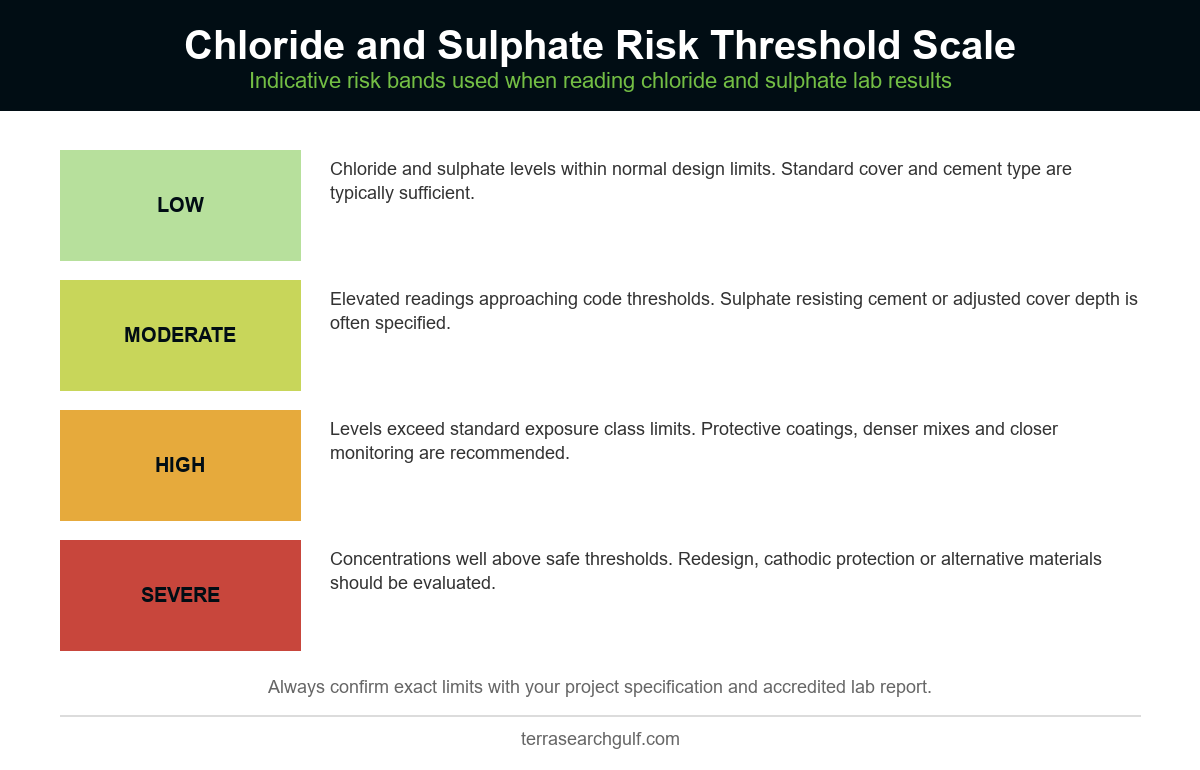
Engineers judge chloride sulphate testing UAE results against published exposure limits rather than instinct, comparing measured ion content to the thresholds set out in recognised standards to decide whether a mix design or site condition needs modification before construction proceeds.
International codes set maximum chloride content as a percentage of cement weight, with lower limits for prestressed concrete than for plain reinforced concrete because prestressing steel is more sensitive to corrosion. Sulphate limits are expressed as exposure classes, ranging from mild to very severe, each requiring a different cement type and cover depth. An astm testing lab Dubai project references for why ASTM standards matter turns these raw threshold numbers into a design conversation about the right cement type, admixtures and cover, not just a pass or fail label on a report.
Because UAE ambient soil and groundwater conditions frequently exceed the mild exposure thresholds these codes assume as a baseline, many local specifications apply UAE specific limits tighter than the international minimum. An astm testing lab Dubai relies on for reliable material standards helps confirm results are read against the correct local benchmark, not simply the lowest common denominator from an imported code. Where a result sits close to a threshold, an independent third party testing lab UAE authorities recognise gives project owners and consultants confidence the number is accurate and defensible before any design decision is finalised.
When to Schedule Testing During Design and Construction
Chloride and sulphate testing delivers the most value when it happens at three points, during the geotechnical investigation phase, before concrete mix design is finalised, and periodically during construction, rather than as a single check box exercise carried out only once.
The first testing round belongs inside the initial site investigation, where soil testing lab Dubai teams collect samples for essential pre construction tests alongside standard geotechnical parameters. This early data shapes foundation type, cover requirements and cement selection long before a contractor mobilises on site. The second round happens once mix design begins, confirming that aggregate, water and any admixtures sourced for the project meet the same chloride and sulphate limits assumed at design stage, since a design based on clean assumptions is worthless if the actual construction materials testing services in UAE contractor sources locally do not match.
A third and often skipped round happens during construction itself, particularly on long duration projects where groundwater conditions can shift with the seasons or nearby dewatering activity. Pairing this with structural testing and analysis services in UAE and steel testing and NDT services in UAE gives a fuller durability picture, since corrosion risk to embedded rebar depends on more than chemistry alone. A construction testing lab Dubai project trusts should also flag when aggregate itself needs checking, since some Gulf aggregate sources carry naturally elevated salt content of their own, which is exactly why aggregate testing in Dubai protects your construction outcome as a distinct and necessary step alongside chloride and sulphate checks.
Conclusion
Chloride sulphate testing UAE projects depend on is not a formality, it is the difference between a structure that reaches its full design life and one that needs costly rebar and concrete repair within a decade. Given the region’s naturally high salt content in soil and groundwater, skipping this step is a risk few consultants or owners can justify. Terrasearch Gulf’s speciality testing services in UAE and accredited laboratory team deliver fast, defensible chloride and sulphate results at every project stage. Learn more about our team on our about us page, or contact us today to schedule testing for your next project.
Frequently Asked Questions
1. What is chloride sulphate testing UAE engineers require before approving a concrete mix design?
It is laboratory analysis of soil, groundwater and concrete samples for chloride and sulphate ion content, giving engineers verified numbers to compare against code limits before approving cover depth, cement type and mix design for a project.
2. Why are chloride and sulphate levels higher in the UAE than in many other countries?
Coastal sabkha soils, shallow saline groundwater and evaporation under intense heat concentrate natural salts close to the surface across much of the UAE, producing chloride and sulphate levels well above limits assumed in many international codes.
3. How does chloride cause damage inside reinforced concrete?
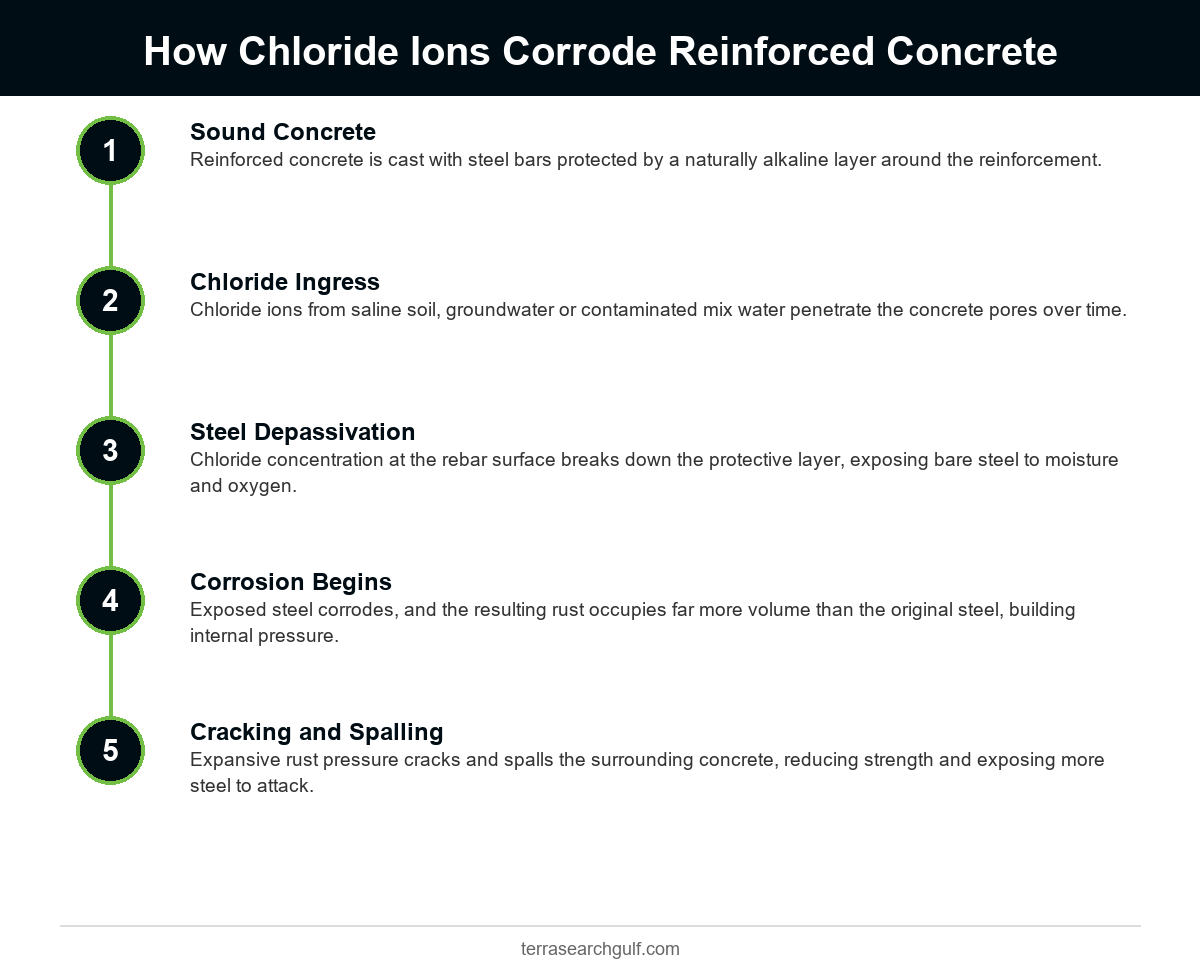
Chloride ions migrate through concrete pores and break down the protective layer around embedded steel, allowing corrosion to begin. The rust that forms expands, cracking and spalling the surrounding concrete over time as the process continues.
4. What does sulphate attack actually do to concrete?
Sulphate ions react chemically with hydrated cement compounds, forming expansive products inside hardened concrete. That expansion cracks the cement matrix from within, reducing strength and durability long before any visible surface damage appears.
5. How often should a project retest chloride and sulphate levels during construction?
Testing typically happens at site investigation, again before mix design is finalised, and periodically during long projects, especially where groundwater or aggregate sources change. Coastal and desert sites generally need closer monitoring than inland projects.
6. Can normal drinking quality water still cause chloride or sulphate problems in concrete?
Yes. Water can meet drinking standards yet still exceed concrete specific chloride or sulphate limits. That is why construction water should be verified separately through a dedicated water testing lab in Dubai before it is used in batching.
7. Does elevated groundwater salinity affect survey and foundation planning too?
Yes. Saline groundwater influences dewatering strategy, excavation support and foundation type, not only concrete chemistry. Coordinating chemical results with survey services in UAE early helps avoid redesign once construction is already underway.
8. What happens if chloride or sulphate levels are found to be too high after construction has started?
Options narrow considerably. Teams may need denser cover concrete, protective coatings, cathodic protection or, in severe cases, redesign. This is far more costly than addressing the same risk during initial testing and design.
9. Are chloride and sulphate testing the same as general concrete strength testing?
No. Strength testing measures load bearing capacity, while chloride and sulphate testing measures chemical exposure risk to durability. Comprehensive non destructive testing UAE methods can complement both, giving a fuller picture of a structure’s long term condition.
10. Where can I learn more about Terrasearch Gulf’s full testing capability?
Visit the Terrasearch Gulf home page for an overview of every service, from geotechnical investigation to chemical analysis, or reach out directly to discuss chloride sulphate testing UAE requirements for your specific project.