

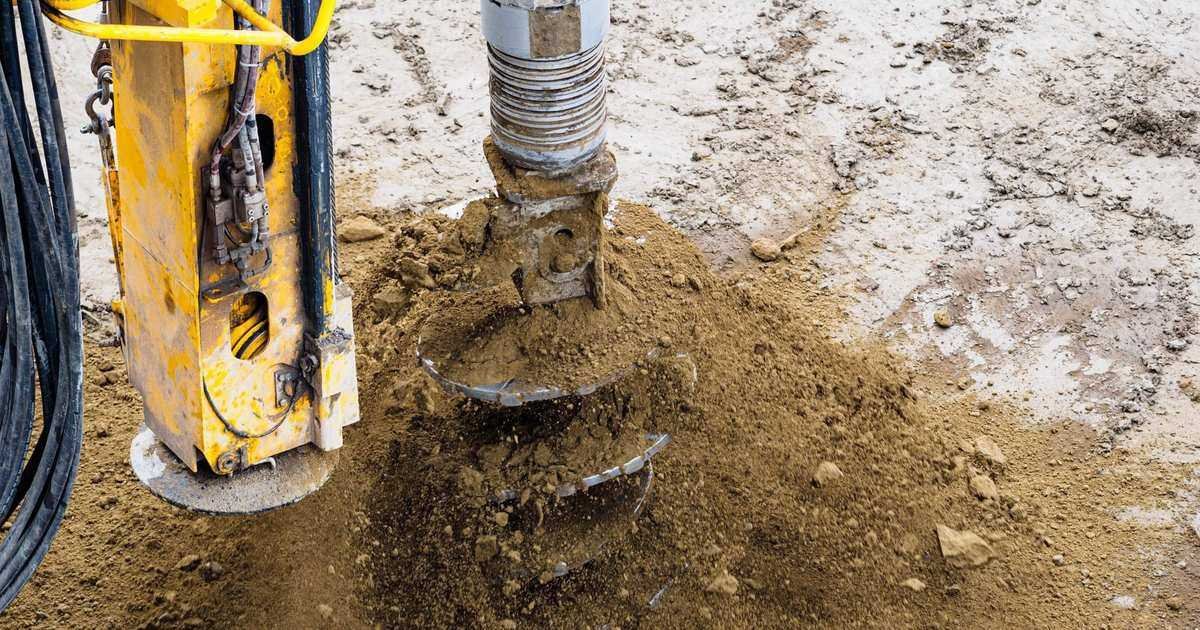
Not every pile is pushed straight down. Basements resist uplift from groundwater, towers resist wind and jetties resist berthing and wave forces. A lateral pile load test in the UAE checks how a pile behaves when pushed sideways, while a tension test checks how it resists being pulled out. This guide explains when each test is needed, how they are set up and run, what the results mean, and how to plan them on UAE sites. It complements our overview of foundation testing before and after construction.
Key Takeaways
- A lateral pile load test in the UAE measures pile head movement and rotation under horizontal load, which often controls the design of tall and marine structures.
- A tension pile test UAE consultants require confirms uplift resistance for basements, towers and anchors where groundwater or overturning pulls on piles.
- Both tests need a clear purpose, a suitable reaction system and acceptance criteria agreed before the test pile is installed.
When Piles Must Resist Sideways and Upward Loads
Lateral and uplift loads come from wind, earthquakes, earth pressure, waves, ship impact and groundwater. In the UAE, deep basements, tall towers and coastal structures all create these loads. When they are significant, a compression test alone does not prove the foundation, so specific tests are added.
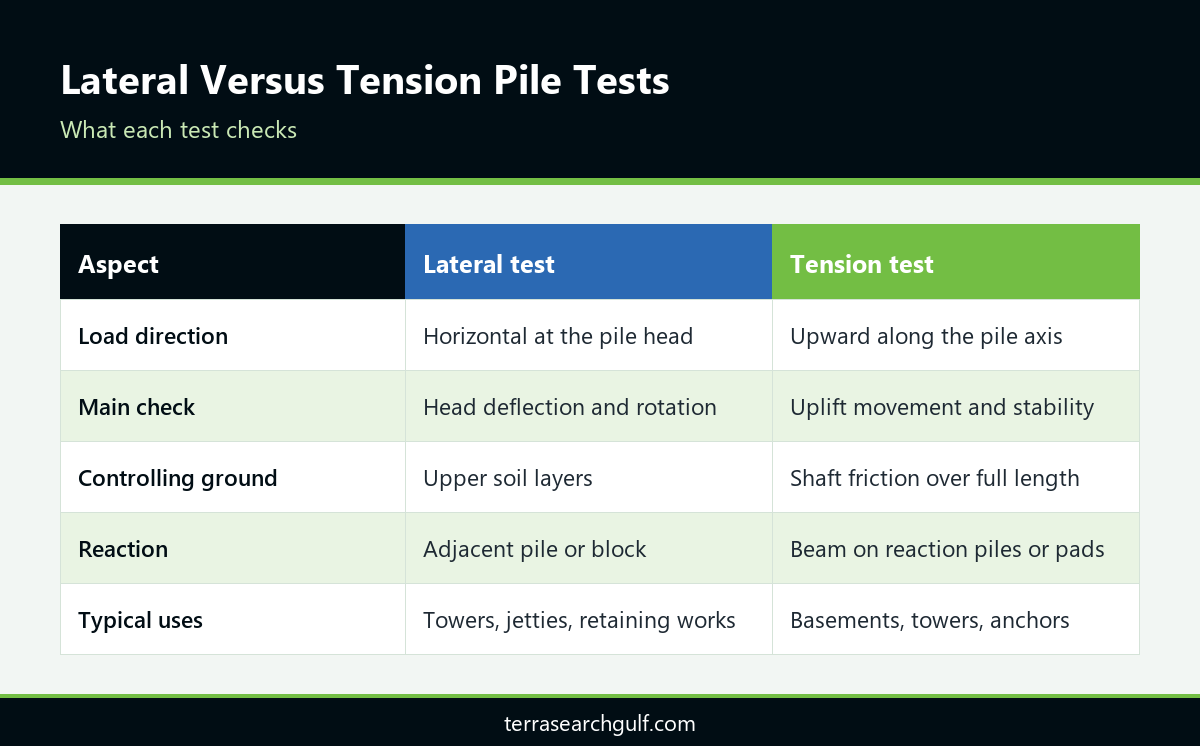
Lateral loads matter most where structures are tall, slender or exposed. Towers transfer wind moments into the piles, retaining structures push sideways on supporting piles, and jetties and marine works face wave and berthing forces. In these cases, the stiffness of the soil near the surface controls how far the pile head moves. That is why a lateral pile load test in the UAE often focuses on deflection at working load rather than ultimate capacity. Uplift matters where buildings are light compared with groundwater pressure, such as deep basements on coastal sites, or where overturning puts some piles into tension. Our structural testing and analysis services support both types of assessment.
The deep foundation overview explains how piles share these loads with the surrounding ground. The key point is simple. If the design relies on a pile resisting sideways or upward load, that resistance should be checked by testing, not assumed from compression results.
A lateral pile load test in the UAE is especially valuable where the design relies on soil stiffness values taken from correlations. Measured deflection lets the designer confirm or adjust those values for the specific site, which can change pile diameters, spacing or cap design across the whole project.
How a Lateral Pile Load Test Works
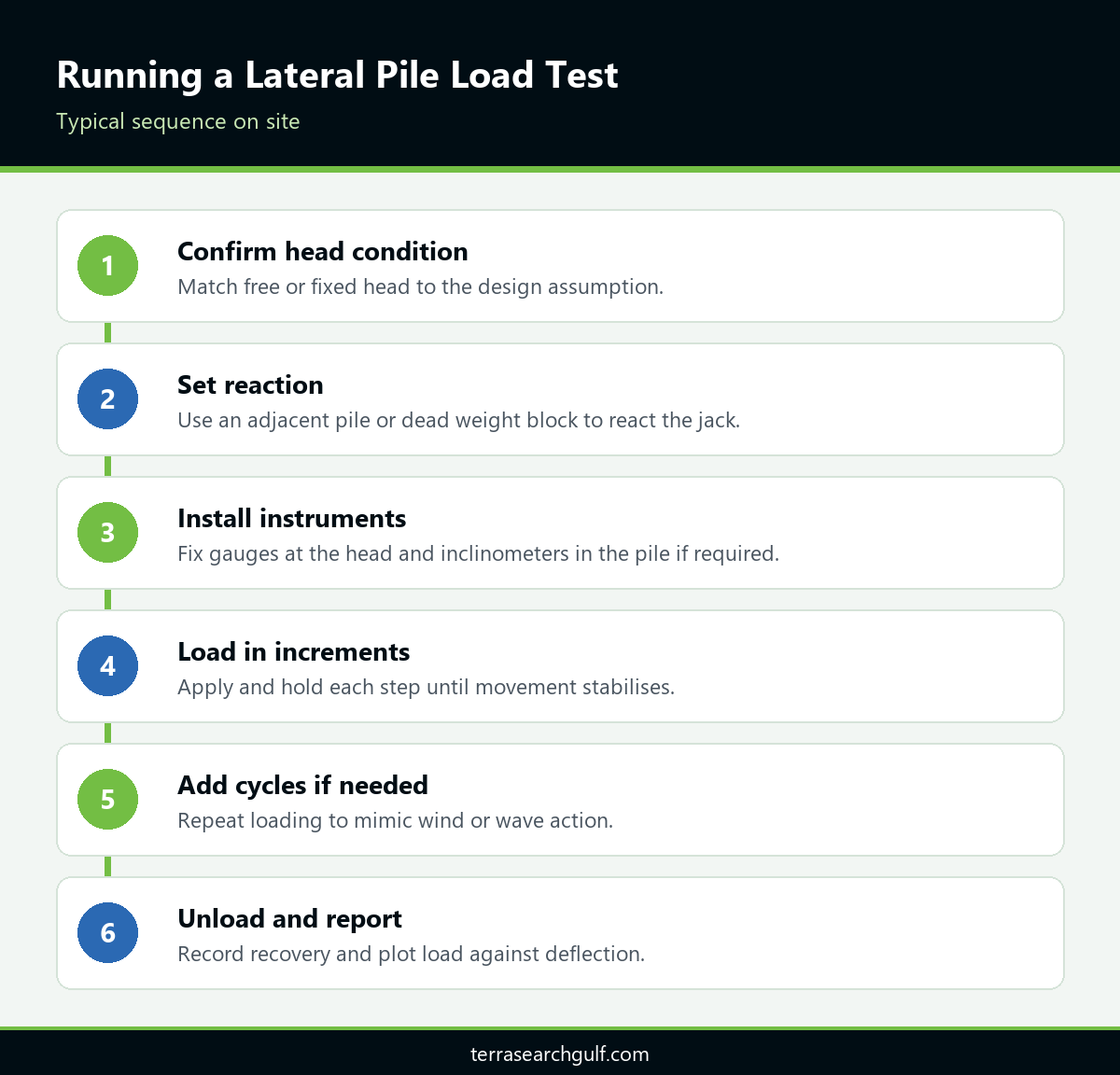
A lateral pile load test in the UAE pushes the pile head sideways with a hydraulic jack and measures how it moves. The reaction usually comes from a neighbouring pile or a dead weight block. Dial gauges or displacement transducers record deflection and rotation at each load step, building a load and deflection curve.
The test pile is often installed alongside a reaction pile, and the jack sits horizontally between them. Load is applied in increments, held at each step while movement stabilises, then removed in stages. Some specifications add cyclic loading to mimic wind or wave action, because repeated loads can soften the surface soils and increase deflection. Inclinometers placed inside the pile can show how it bends with depth, which helps the designer check soil stiffness values. The general procedure is covered by ASTM D3966 for lateral load tests on piles. On any lateral pile load test in the UAE, the pile head condition is critical. A free head behaves very differently from a head fixed into a cap, so the test arrangement must match the design assumption.
Surface soils control lateral behaviour, so the upper few metres of ground deserve attention. Disturbance, excavation or loose fill near the pile head can change results significantly. Record ground levels and any excavation around the test pile before loading starts.
Group effects deserve a mention too. Piles in a closely spaced group deflect more under the same load per pile than a single isolated pile, because their zones of influence overlap. A single lateral pile load test therefore needs adjustment when applied to a group, and the designer should state how the results will be used.
How a Tension Pile Test Works
A tension test pulls the pile upwards and measures how far it rises. The jack sits on a beam supported by reaction piles or ground bearing pads either side of the test pile. Steel bars or reinforcement extended from the pile carry the load into the jacking system.
Because the pile has no end bearing in tension, the test measures shaft friction directly. That makes an uplift pile test Dubai consultants specify useful for checking friction values used across the whole design, not only for tension piles. The pile reinforcement must be able to carry the full test load, so the bars or a special tension connection are usually designed before the pile is cast. Load is applied in steps and held, with displacement recorded at the head. Some tests also measure movement at the toe to separate pile stretch from slip along the shaft. The procedure follows ASTM D3689 for axial tensile load tests. On a tension pile test UAE specifications call for, the reaction supports must be far enough from the test pile so they do not influence the surrounding soil.
Tension results are sensitive to construction quality. Poor base cleaning does not matter in tension, but a smeared or softened shaft does. Drilling records for the test pile are therefore as important as the test data itself.
Coastal basements are a common case in the UAE. When groundwater sits close to the surface, the buoyancy of a deep basement can exceed the weight of the structure above during construction. Tension piles hold it down. An uplift pile test Dubai specifications include for these basements checks that the friction assumed in design is really available in the local sands and rock.
Reading Results and Setting Acceptance Criteria
Results only mean something against agreed criteria. For lateral tests, the usual check is head deflection at working load and at a factored load. For tension tests, it is upward movement at working load and whether the pile reaches the test load without continuous creep.
The designer should set limits before testing, based on what the structure can tolerate. A lateral pile load test in the UAE is often judged on deflection limits at the cap level, because excessive movement can damage connections or cladding. Tension results are judged on movement and stability under sustained load. Where a lateral pile load test in the UAE falls short, the designer can back analyse soil parameters from the measured response and revise the design, for example by adding piles, deepening them or stiffening the cap. Where results are better than expected, they may support optimisation on later phases. Ground data explains much of the variation, so link results to the ground investigation report and its stages.
Planning Lateral and Tension Tests on UAE Sites
Plan any lateral pile load test in the UAE during design, not after piling starts. The test pile reinforcement, head detail and reaction system all need decisions before casting. Early planning also lets the team place test piles where ground conditions represent the worst case for the loads being checked.
Agree the purpose of each test first. A preliminary test pile loaded to failure gives design data, while a working pile test confirms performance without damaging the pile. Then agree test loads, hold periods, instrumentation, cyclic stages and acceptance criteria with the consultant. Check how the tests fit within wider pile load testing UAE requirements, as many projects combine compression, tension and lateral tests in one campaign to share reaction systems and mobilisation. Record installation details for every test pile. During a lateral pile load test in the UAE, also protect the ground around the test pile from excavation or traffic until testing is complete.
Finally, choose a testing partner who can design the reaction system, supply calibrated equipment and interpret the results for the designer. Clear reporting shortens the time between testing and design decisions.
Coordinate the test with the cone penetration testing data for the site where available. Continuous CPT profiles show the stiffness of the upper soils in detail, which helps explain why the result of a lateral pile load test in the UAE differs from the design prediction and supports a quick, evidence based design update.
Conclusion
Lateral and uplift loads can govern pile design for towers, basements and marine structures, and compression tests alone cannot prove them. A lateral pile load test in the UAE, planned early and paired with targeted tension tests, gives designers measured behaviour instead of assumptions. Agree the purpose, reaction system and criteria before casting, and link results back to the ground data. Terrasearch Gulf brings 10+ engineers and an EIAC accredited laboratory to foundation testing across the UAE. Contact our team to plan lateral and tension testing for your next project.
Frequently Asked Questions
What is a lateral pile load test in the UAE?
It is a test that pushes a pile head sideways with a hydraulic jack and records deflection and rotation at each load step. It checks whether the pile meets the movement limits assumed in the foundation design.
When is a tension pile test needed?
A tension test is needed when piles must resist uplift, such as under deep basements with high groundwater or where overturning loads from towers put some piles into tension. The designer normally decides which piles to test.
Why do surface soils matter so much in lateral tests?
Lateral load is resisted mainly by the upper soil layers near the pile head. Loose fill, excavation or disturbance in this zone can increase deflection significantly, so ground conditions around the test pile must be recorded carefully.
Can a tension test check shaft friction values?
Yes. With no end bearing in tension, the test measures shaft friction directly. Results can confirm or refine the friction values used in compression design, which makes tension tests useful even on mainly compression piles.
What reaction is used for a lateral test?
The jack usually reacts against an adjacent pile or a heavy dead weight block. The reaction must be stiff and far enough away that its movement and soil disturbance do not affect the test pile response.
Should lateral tests include cyclic loading?
Cyclic loading is often added where wind or wave forces repeat, such as on towers and marine structures. Repeated loads can soften surface soils and increase deflection, so the specification should state whether cycles are required.
How long does a tension or lateral test take?
Duration depends on the number of load steps, hold periods and any cyclic stages in the specification. Most tests take one to several days on site, plus setup time for the reaction system and instruments.
Who should design the test arrangement?
An experienced testing partner should design the reaction and instrumentation with the consultant. Our guide to how EIAC accreditation and approvals work explains how to confirm a lab is accredited for pile load testing.
Is ground investigation needed before lateral design?
Yes. Lateral design depends on soil stiffness near the surface, which comes from investigation data. Our geotechnical investigation services provide the soil profile and parameters that designers use for lateral and uplift checks.