

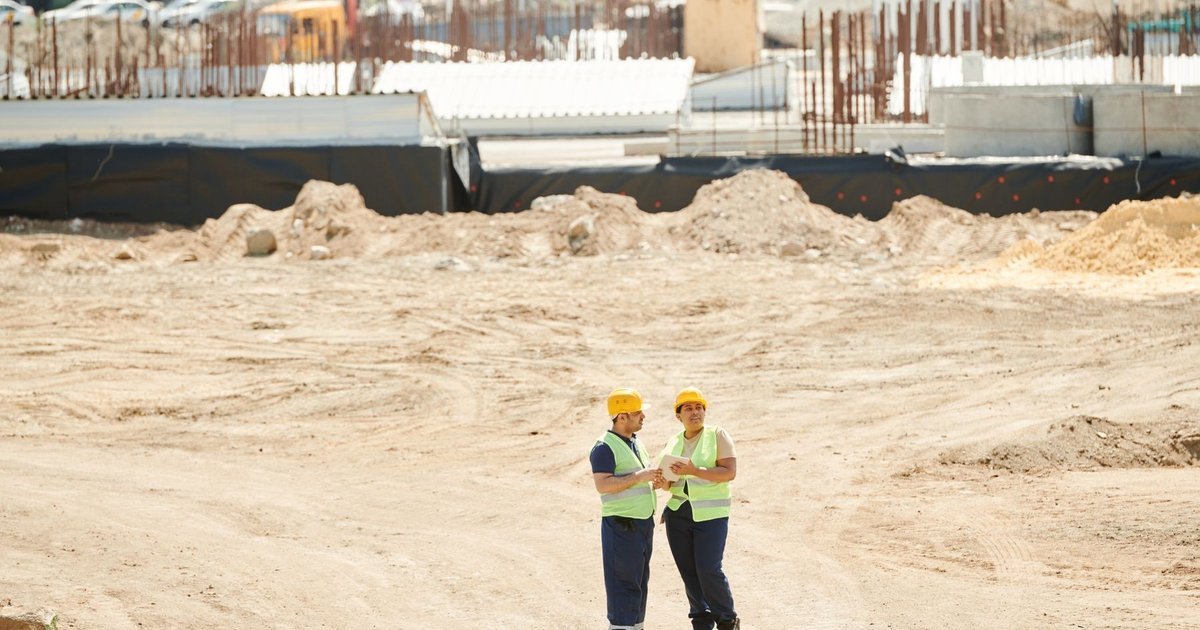
Static tests are reliable but slow and expensive, so most projects cannot test every pile that way. Dynamic pile testing in the UAE fills that gap by estimating capacity from a single impact, often in under an hour per pile. If you searched for dynamic pile testing UAE and want plain answers, this guide is for you. This guide explains how high strain testing works, what the analysis really tells you, when consultants accept it in place of static tests and where its limits lie. It builds on our overview of foundation testing before and after you build.
Key Takeaways
- Dynamic pile testing in the UAE measures force and velocity during a heavy impact, then signal matching estimates capacity and how it is distributed.
- Searches for PDA test Dubai advice all reach the same point: results are usually calibrated against at least one static test on the same site and in similar ground.
- Results depend on head preparation and impact energy, and a sound report states clearly whether full resistance was mobilised.
How Dynamic Pile Testing in the UAE Works
Searches for high strain pile test UAE information describe one process. The laboratory drops a heavy weight onto the pile head and records the resulting stress wave. Sensors near the head measure strain and acceleration. Software then converts these signals into force and velocity, which reveal how the soil and rock resist the pile.
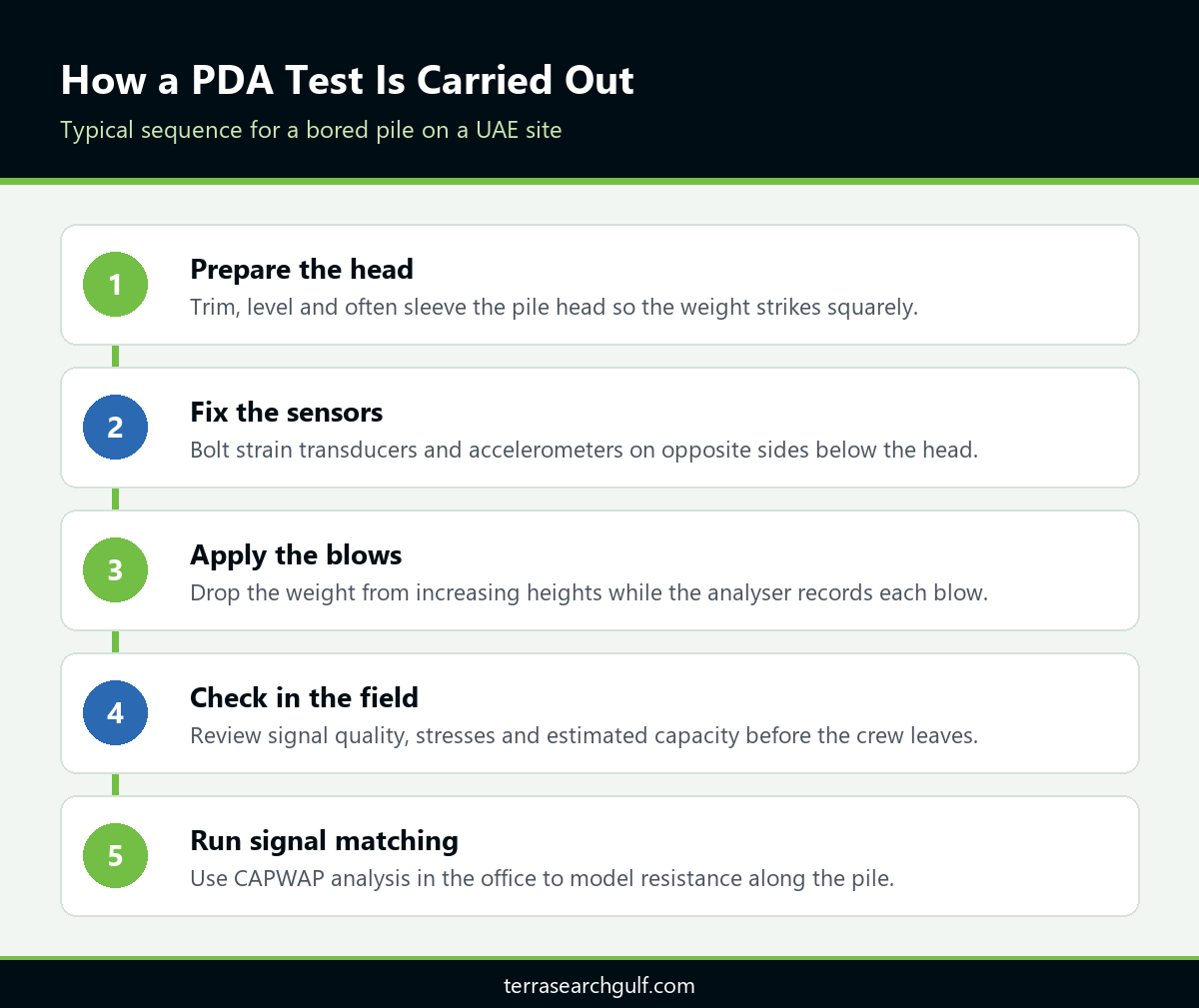
The method is standardised in ASTM D4945. Two strain transducers and two accelerometers are bolted to opposite sides of the pile, usually one and a half to two diameters below the head. A pile driving analyser, often shortened to PDA, records the signals for each blow and shows field estimates of capacity, stresses and transferred energy.
For driven piles, the impact comes from the piling hammer itself. Bored piles, which are far more common in Dubai, need a separate drop weight system, which is how most dynamic pile testing in the UAE is carried out. The weight is typically around one to two percent of the test load, lifted by crane or a purpose built frame and dropped from a controlled height. Several blows may be applied, with the drop height increased in stages.
The physics behind it is wave equation analysis. When the stress wave travels down the pile, soil resistance along the shaft and at the toe sends reflections back up. By reading those reflections, the engineer can separate shaft friction from end bearing and estimate the total resistance mobilised by the blow.
Dynamic pile testing in the UAE is quick. Once the pile head is prepared and the sensors are fixed, the blows themselves take minutes. That speed is why dynamic testing has become routine on large sites, and why searches for pile testing Dubai services so often mention PDA.
What CAPWAP Analysis Tells You
During dynamic pile testing in the UAE, the field reading is only an estimate. The real answer comes from signal matching, commonly known as CAPWAP analysis. It adjusts a computer model of the pile and ground until the predicted signals match the measured ones, giving capacity, resistance distribution and a simulated load test curve.
Signal matching models the pile as a series of segments, each with soil springs and dampers representing shaft and toe resistance. The analyst adjusts these values until the calculated force or velocity trace matches the measured one closely. A good match gives confidence that the resistance distribution is realistic.
The output usually includes total mobilised capacity, the split between shaft and toe, and a simulated static load and settlement curve. That simulated curve is useful for comparison with design predictions and with any static tests on the same site.
The quality of the match matters. Analysts report a match quality number, and a poor match should be explained. Experienced engineers also check that the modelled resistance makes sense against the borehole logs and ground model. A model that puts high friction in a layer the investigation showed as loose sand should be questioned.
Remember that the analysis can only report the resistance the blow actually mobilised. If the pile hardly moved, the true capacity may be higher than the figure quoted. A careful report states this clearly instead of presenting a lower bound as the full capacity.
For the consultant, the practical question is simple. Does the mobilised capacity, with an appropriate factor, exceed what the pile must carry? A clear summary table listing each pile, its mobilised capacity, the shaft and toe split and the match quality makes that judgement quick.
When Dynamic Tests Can Replace Static Tests
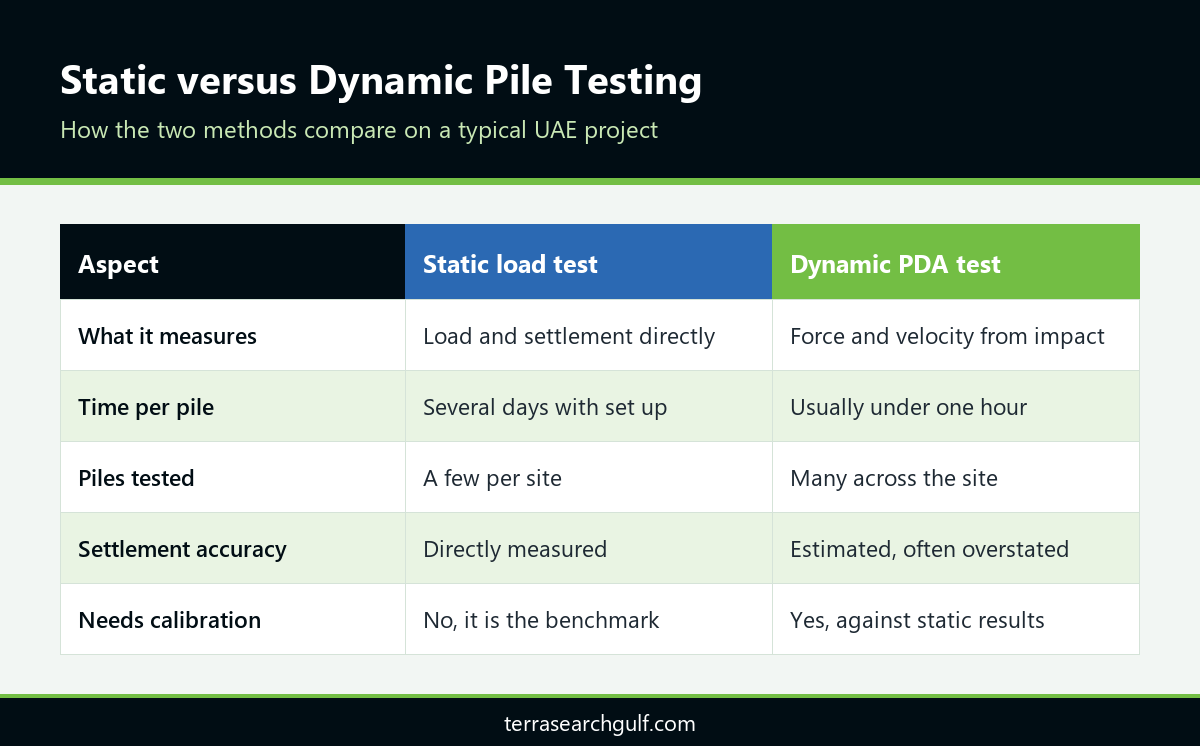
Consultants rarely accept the results of dynamic pile testing in the UAE on their own. The usual approach is to calibrate them against static tests on the same site, then use dynamic tests to extend coverage. Where that correlation is good, a share of the static programme can be replaced, saving time and cost.
Calibration means testing at least one pile both statically and dynamically, or testing similar piles in similar ground both ways. If the dynamic capacity and simulated curve agree well with the static result, the consultant can accept dynamic tests elsewhere on the site with greater confidence.
Published comparisons on piles socketed in Dubai limestone have found reasonable agreement on capacity between static and dynamic tests, while dynamic tests tended to overestimate settlement. That pattern is worth remembering when results are close to settlement limits.
The substitution must be agreed in writing with the consultant and, where relevant, accepted by the approving authority. The specification may set a ratio, for example a number of dynamic tests in place of one static test. Without that agreement, dynamic results are treated as supplementary evidence rather than a replacement.
Dynamic pile testing in the UAE also earns its place beyond substitution. Testing a larger share of piles reveals variability across the site that a handful of static tests could miss, and it can flag individual piles that need closer attention.
Selecting which piles to test dynamically is part of the plan. A sensible spread covers each pile diameter, each load group and each zone of the site, with extra tests where the investigation showed weaker or more variable rock. Piles with construction problems are good candidates too. This approach turns dynamic pile testing in the UAE into a genuine check on consistency rather than a box ticking exercise.
Limits and Good Practice for Dynamic Pile Testing in the UAE
Dynamic pile testing in the UAE is powerful but sensitive to how they are carried out. Poor head preparation, eccentric blows, insufficient energy or damaged concrete can all spoil the data. Good practice on site, and honest reporting, separate useful results from misleading ones.
Weather and site logistics also play a part. Lifting a drop weight needs a crane or frame with a clear area around the pile, and testing should pause in high winds. Coordinating the test crew with the piling subcontractor avoids a pile head being covered or damaged before it is tested. A short daily plan agreed between site, consultant and laboratory keeps these practical details under control.
Head preparation is the most common problem. The head must be sound concrete, cut square, and often extended or sleeved with steel so the weight strikes centrally. Sensors must sit on sound concrete, away from cracks. A rushed preparation usually means a second visit.
Energy is the next issue. If the drop weight is too light or the drop too low, the pile barely moves and the test cannot mobilise its full resistance. Increasing the drop height in stages helps, but stresses must be monitored so the pile is not damaged. The analyser shows compressive and tensile stresses for each blow.
Concrete age matters too for dynamic pile testing in the UAE. The pile must reach sufficient strength before testing, as set out in the specification. Testing too early risks damage and unreliable signals.
Finally, choose a laboratory with the right accreditation scope and experience. Dynamic testing sits within wider non destructive testing methods, and an EIAC accredited lab with the method on its scope gives the consultant confidence. More background on the technique is available in this overview of dynamic load testing.
Conclusion
Dynamic testing lets a project test far more piles than static methods alone could cover, at a fraction of the time and cost. Its value depends on calibration against static tests, careful head preparation, enough impact energy and honest reporting of what each blow proved. Planned well, dynamic pile testing in the UAE gives a clearer picture of the whole foundation. Terrasearch Gulf provides high strain testing through our structural testing and analysis services. To plan a programme, contact our team.
Frequently Asked Questions
Dynamic pile testing UAE: what is it and how does it work?
It is a high strain test that drops a heavy weight on the pile head and records force and velocity with sensors. Signal matching software then estimates pile capacity and how resistance is shared between the shaft and the toe.
What does PDA stand for in pile testing?
PDA refers to the pile driving analyser, the instrument that records strain and acceleration signals during each blow. The term is often used loosely to describe the whole high strain dynamic test carried out on a pile.
What is CAPWAP analysis?
CAPWAP is a signal matching analysis that adjusts a computer model of the pile and ground until predicted signals match measured ones. It gives mobilised capacity, the shaft and toe split and a simulated static load curve.
How heavy is the drop weight for a bored pile?
The drop weight is commonly around one to two percent of the required test load, although the specification and pile size decide the final figure. Too light a weight may fail to mobilise the full resistance of the pile.
Can dynamic tests replace all static tests?
No. Most consultants require at least one static test on each site to calibrate the dynamic results. Once correlation is shown, dynamic tests can replace part of the static programme if the consultant and authority agree.
How long does a PDA test take?
Once the pile head is prepared and sensors are fixed, the blows take only minutes. Including set up, most piles can be tested within an hour, so several piles are usually completed in a single working day.
Why do dynamic tests overestimate settlement?
A dynamic blow loads the pile for milliseconds, so the modelled settlement does not capture time dependent behaviour exactly. Comparisons in Dubai limestone found capacity agreed well with static tests while settlement was often overestimated.
What ground information helps interpret dynamic tests?
Borehole logs, rock core strength results and groundwater levels all help the analyst build a realistic model. Our guide to subsurface investigation in Dubai explains what boreholes and geophysics reveal before any piles are designed or tested.
What accreditation should a dynamic testing lab hold?
Look for EIAC accreditation with high strain dynamic testing listed on the scope. Our guide to what ISO 17025 accreditation guarantees explains why the listed methods matter as much as the certificate itself when choosing a laboratory.