

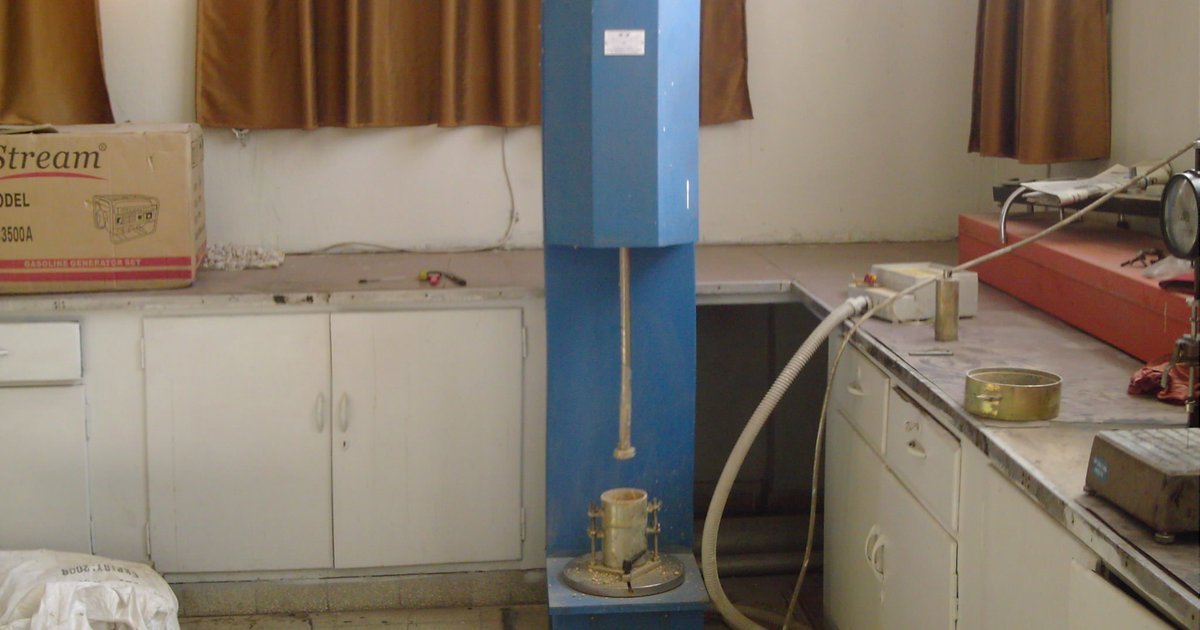
Every fill layer and subgrade placed on a Dubai construction site must reach a verified density before slabs, roads, or pavements are built on top of it. A proctor test dubai contractors rely on determines exactly how much compaction that soil needs and how much water helps it get there. Terrasearch Gulf runs standard and modified Proctor testing under controlled laboratory conditions, supported by wider geotechnical investigation work carried out across the emirate. This guide explains how compaction testing works, why it matters for UAE earthworks, and how results are checked against a live site once fill has been placed.
Key Takeaways
- Standard and modified Proctor tests establish a soils optimum moisture content and maximum dry density before earthworks begin.
- Compaction control on Dubai fill and reclaimed ground prevents settlement, pavement rutting, and slab cracking after handover.
- Field density results are checked against the laboratory Proctor curve to confirm every layer meets the specified percent compaction.
What a Proctor Test Measures and Why Dubai Sites Need It
A proctor test dubai measures how densely a soil compacts at different moisture contents inside a controlled laboratory mould. The result is a compaction curve that identifies the optimum moisture content and the maximum dry density a specific fill material can reach, giving engineers a defensible target for every layer placed on site.
Terrasearch Gulf carries out this testing as part of wider geotechnical investigation services across residential, infrastructure, and industrial projects in the UAE. The method traces back to the original Proctor compaction test developed for earth dam construction, and the same principle still governs how fill is approved on Dubai sites today. Without this baseline, inspectors have no reference to confirm whether a compacted layer is dense enough to carry the design load safely. The test also feeds directly into construction materials testing services, since the same fill often needs strength and gradation checks alongside its compaction curve before it is approved for use.
Dubai sites frequently receive fill from several different sources across a single earthworks program, and each material compacts differently depending on grain size and clay content. Running a fresh compaction test dubai teams can trust whenever the source material changes protects the project from applying an outdated curve to a new soil, a common cause of failed field density results. Our material testing laboratory in Dubai processes these samples quickly so earthworks are not delayed.
Standard Proctor Test vs Modified Proctor Test
The standard proctor test and the modified proctor test both plot dry density against moisture content, but they apply different compactive effort. Specifiers choose between the two based on the loads a layer will eventually carry, from light landscaping fill through to heavy pavement and industrial floor subgrades.
The standard proctor test uses a lighter hammer dropped from a shorter height across three compacted layers, representing the effort typical rollers apply to general fill and landscaping subgrade. The modified proctor test applies roughly four and a half times more compactive energy across five layers, matching the heavier rollers used on road pavements, container yards, and industrial slabs. Terrasearch Gulf selects the correct method against the project specification, often referencing recognised ASTM testing standards and drawing on findings from soil tests carried out before construction begins on the same plot.
Choosing the wrong method produces a compaction curve that does not match real site conditions, which can lead to disputed compaction claims or a layer that looks compliant in the lab but fails under traffic loading. Our engineering labs in Dubai keep both mould sizes calibrated and ready so the correct test is available whenever a specification changes midway through a program.
Optimum Moisture Content and Maximum Dry Density Explained
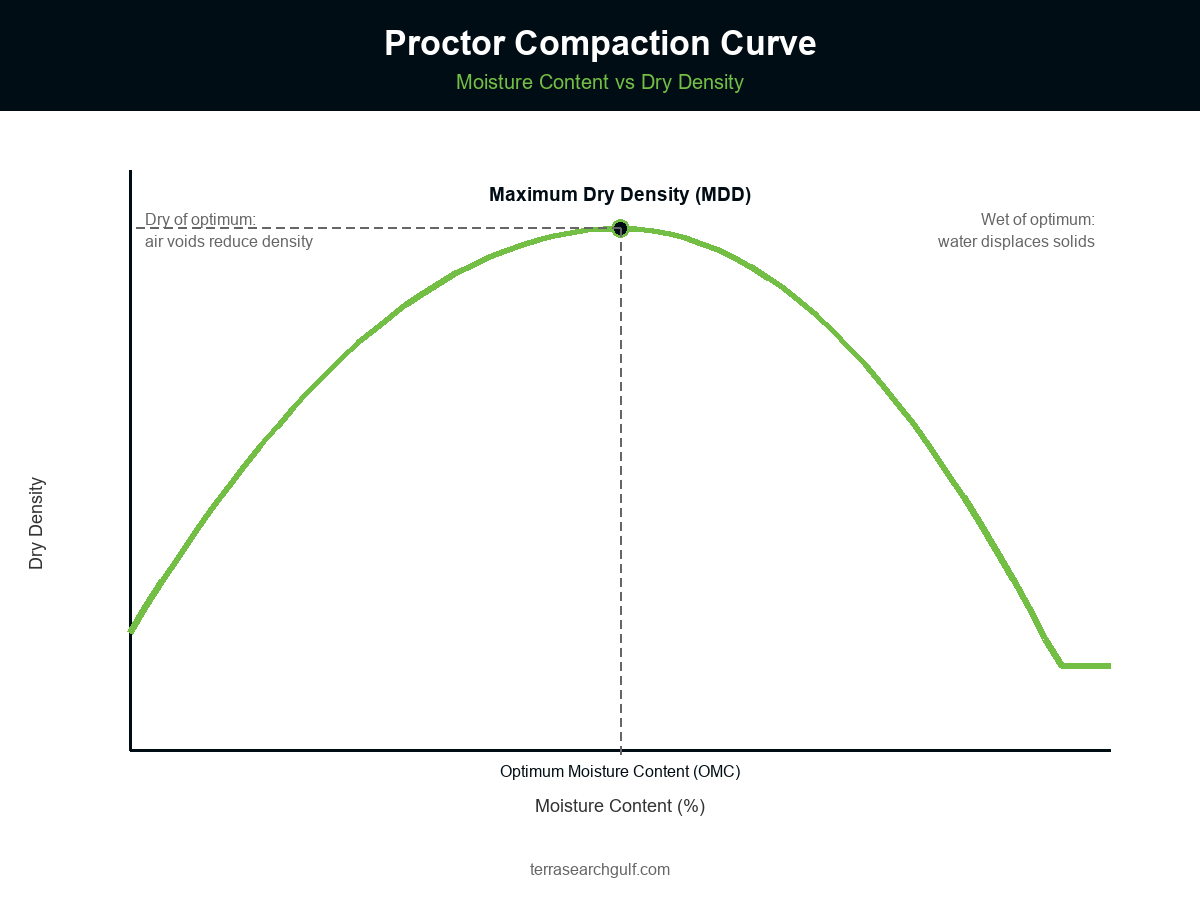
Every proctor curve rises to a single peak, and that peak is the point engineers design around. The optimum moisture content is the water level at which soil particles pack together most efficiently, producing the maximum dry density the material can achieve under a given compactive effort.
Soil compacted too dry resists rearrangement, leaving air voids between particles that reduce density however hard it is rolled. Soil compacted too wet behaves differently again, since surplus water occupies space that solid particles would otherwise fill, and heavy equipment can pump and rut it rather than compact it further. Between these two extremes sits the optimum moisture content, where water lubricates particles just enough for them to slide into a denser arrangement. This principle underpins every soil density testing uae laboratory reports back to site teams, and it is why our full range of geotechnical laboratory tests always begins with an accurate moisture profile.
Getting this figure right protects the client from two expensive outcomes: fill that settles after handover because it was under compacted, and fill that never reaches target density no matter how many roller passes it receives because it was over watered. Our teams support this work with professional soil analysis for construction across residential towers, roads, and utility corridors throughout the emirate.
How the Laboratory Test Procedure Works
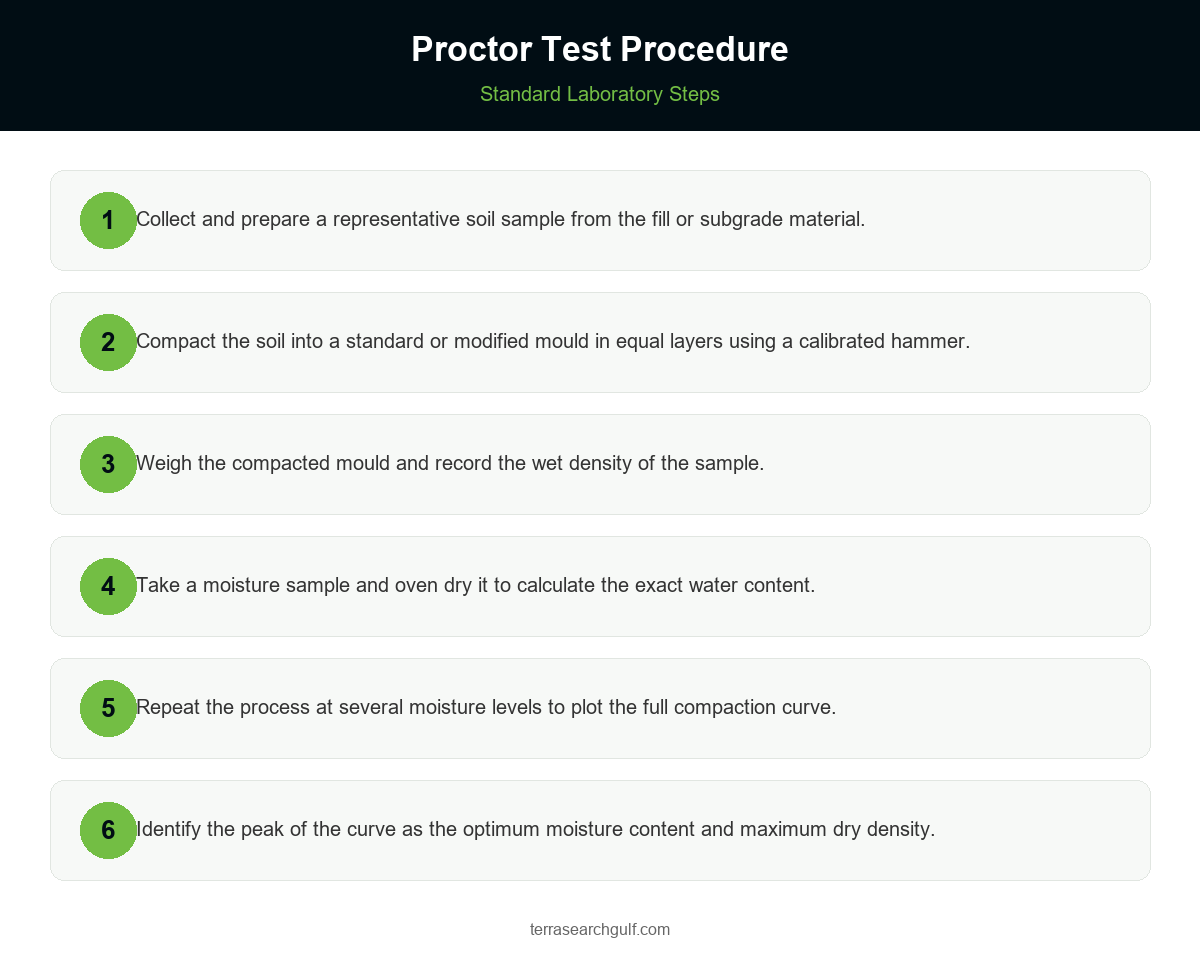
The Proctor procedure follows a repeatable sequence in the laboratory. A sample is compacted into a mould at a known moisture level, weighed, oven dried, then the process is repeated at several moisture levels until the full compaction curve can be plotted with confidence.
Technicians begin with a representative sample from the fill or subgrade material and prepare it at a known starting moisture content. The soil is compacted into the mould in equal layers using a calibrated hammer dropped from a fixed height, following one of the material testing methods every builder should know before submitting samples. The compacted mould is weighed to record wet density, then a small portion is oven dried to establish the exact water content of that run.
This sequence is repeated at four or five different moisture contents, each producing a new dry density value. Plotting these points produces the compaction curve, and the peak identifies the optimum moisture content and maximum dry density for that specific soil. Our construction testing lab in Dubai turns this process around quickly so specification approval does not hold up earthworks scheduling.
Verifying Field Compaction Against the Proctor Curve on Site
Laboratory results only matter once they are checked against the real fill placed on site. Field density testing measures the actual dry density achieved by each compacted layer and compares it against the laboratory maximum dry density as a percent compaction figure.
Field teams typically target ninety five to one hundred percent of the laboratory maximum dry density, depending on the specification and the layer being checked. Density is measured directly on the compacted surface and compared immediately against the proctor curve established earlier, allowing contractors to catch soil testing that prevents foundation failures before slabs or pavement layers are placed over noncompliant fill. Independent third party testing lab verification gives consultants and authorities confidence that reported figures reflect what is actually on site, not just what was submitted on paper. This is the essence of compaction control on every UAE earthworks program, whether the fill sits under a villa foundation or a highway embankment.
Once compaction is confirmed, pavement and industrial floor designs often call for an additional soil strength check. Teams typically request a California Bearing Ratio test at this stage, a related soil strength test covered in its own dedicated guide, once the compacted layer has already passed density verification. Our speciality testing services and aggregate testing services support this wider quality chain from imported fill through to finished subgrade. That chain begins with the professional soil investigation carried out earlier in the project, since soil testing as the first step in infrastructure development shapes every fill specification that follows.
Conclusion
A proctor test dubai earthworks depend on gives engineers a defensible density target long before the first roller reaches site, and field verification confirms that target has actually been met. Terrasearch Gulf delivers standard and modified Proctor testing alongside the full range of testing services engineers need across a project lifecycle, backed by an accredited laboratory team with deep experience across UAE ground conditions. If your project needs compaction testing, field density verification, or support with a wider geotechnical program, contact Terrasearch Gulf and our engineers will confirm scope, timelines, and sample requirements for your site.
Frequently Asked Questions
1. What is a proctor test dubai contractors need before placing fill?
A proctor test dubai contractors request in the laboratory determines the optimum moisture content and maximum dry density of a soil, giving engineers a target for compacting fill layers safely, often alongside survey services used to set out levels across the same site.
2. What is the difference between a standard proctor test and a modified proctor test?
A standard proctor test applies lighter compactive effort across three layers, while a modified proctor test applies roughly four and a half times more energy across five layers, matching heavier equipment used on pavements and industrial floors.
3. What is optimum moisture content in soil compaction?
Optimum moisture content is the water level at which soil particles pack together most densely under a given compactive effort. Below or above this figure, the same soil reaches a lower maximum dry density however much it is rolled.
4. What is maximum dry density and why does it matter?
Maximum dry density is the highest density a soil can reach at its optimum moisture content. Specifications reference it as the benchmark field compaction must meet, similar to how steel testing and NDT services report against specified acceptance criteria.
5. How is a soil density testing uae sample prepared in the laboratory?
Technicians collect a representative sample from the fill material, then compact it into a mould at a known moisture content using a calibrated hammer, before weighing and oven drying it with the same equipment supporting our chemistry lab and material analysis services.
6. How many layers are compacted during a standard proctor test?
A standard proctor test compacts soil into the mould in three equal layers, each receiving a fixed number of hammer blows. A modified proctor test increases this to five layers with a heavier hammer and higher drop height.
7. How is field compaction verified against the Proctor curve on site?
Field density testing measures the dry density actually achieved on a compacted layer, then compares it against the laboratory maximum dry density as a percent compaction figure, usually targeting ninety five to one hundred percent.
8. What percent compaction is normally required on UAE construction projects?
Most UAE specifications require ninety five to one hundred percent of the laboratory maximum dry density, though the figure depends on the project, the layer type, and pavement or structural loads, consistent with concrete testing standards for related elements.
9. How is a proctor test different from a CBR test?
A proctor test establishes the density target for compacted fill, while a California Bearing Ratio test measures the strength of that fill once compacted. Both are usually requested together with structural testing and analysis services for pavement design.
10. How long do compaction test dubai results take to be issued?
Laboratory Proctor curves typically take a few working days once a representative sample is received, since several moisture points must be tested and oven dried. Visit the Terrasearch Gulf home page to view our full accredited laboratory network.