

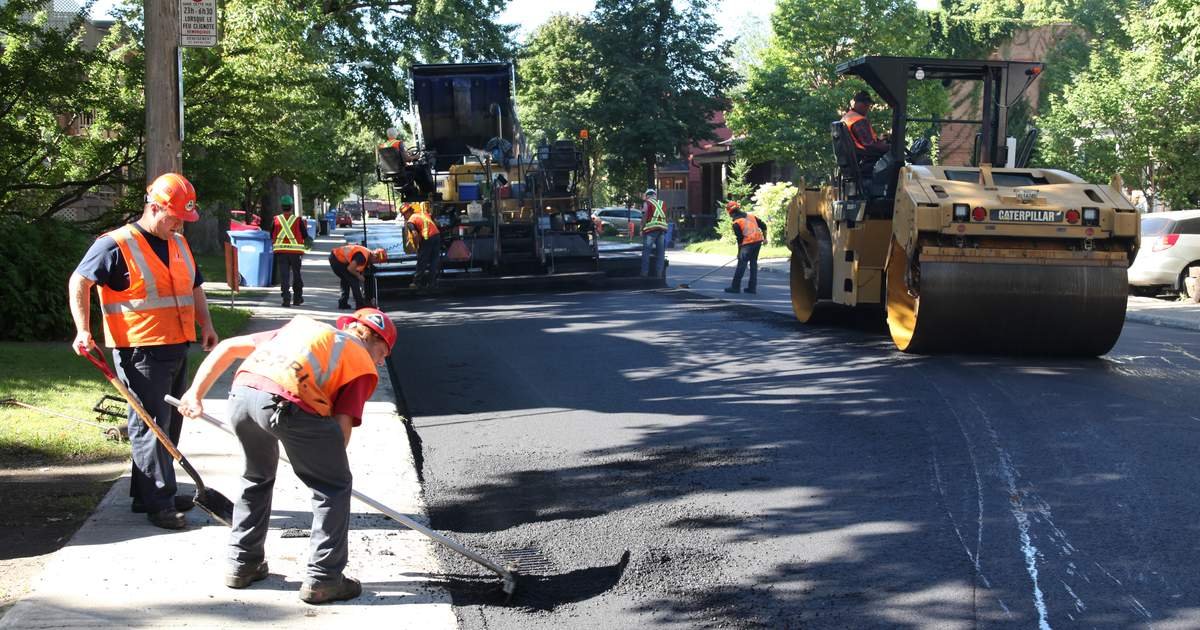
Dubai and the wider UAE continue to expand highway corridors, arterial roads and last mile infrastructure at a rapid pace, and every project depends on a properly engineered pavement. A CBR test UAE contractors trust measures how well subgrade and base course material will support traffic loads before a single layer of asphalt goes down. Skipping it, or relying on outdated data, invites premature cracking, rutting and costly resurfacing. This guide explains what the California Bearing Ratio test involves, how Terrasearch Gulf runs geotechnical investigation and CBR programs, and how results shape construction materials testing for UAE roads.
Key Takeaways
- The CBR test UAE engineers rely on quantifies subgrade and base course strength as a percentage compared with a standard crushed stone reference.
- CBR results feed directly into pavement thickness design, helping prevent early failure on high traffic UAE roads.
- Both laboratory and in situ CBR methods are available depending on project stage, site access and the type of road subgrade testing UAE required.
What the CBR Test Measures and Why It Matters
The California Bearing Ratio test compares the resistance of a soil or aggregate sample to plunger penetration against the resistance of a standard well graded crushed stone material. Expressed as a percentage, the CBR value tells pavement engineers how strong a subgrade or base course actually is before any road construction begins.
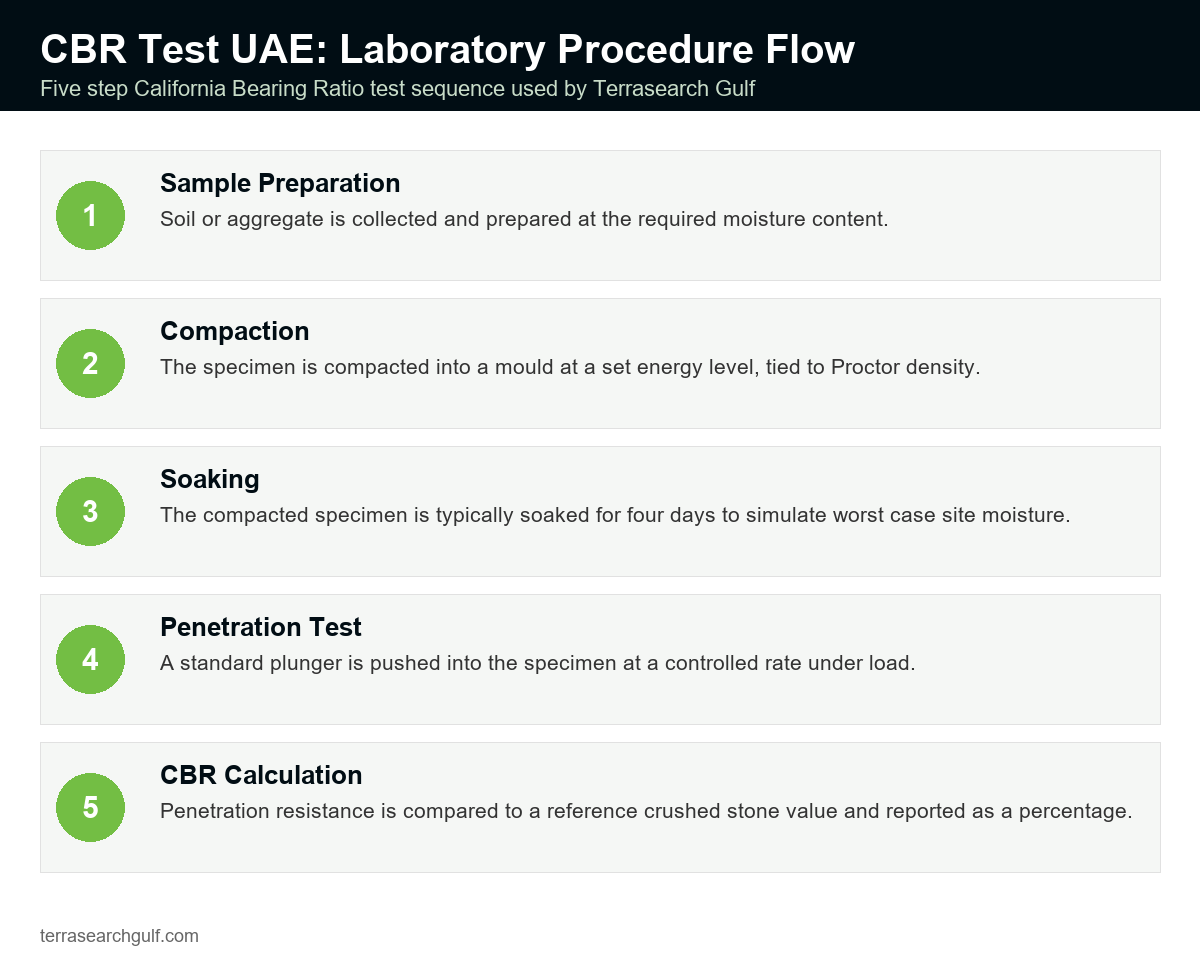
A CBR dubai laboratory prepares a compacted specimen at a specified moisture content, then measures the force needed to push a standard plunger into it at a controlled rate. That force is compared against the force required for the same penetration into a reference crushed stone material, and the ratio is reported as a percentage.
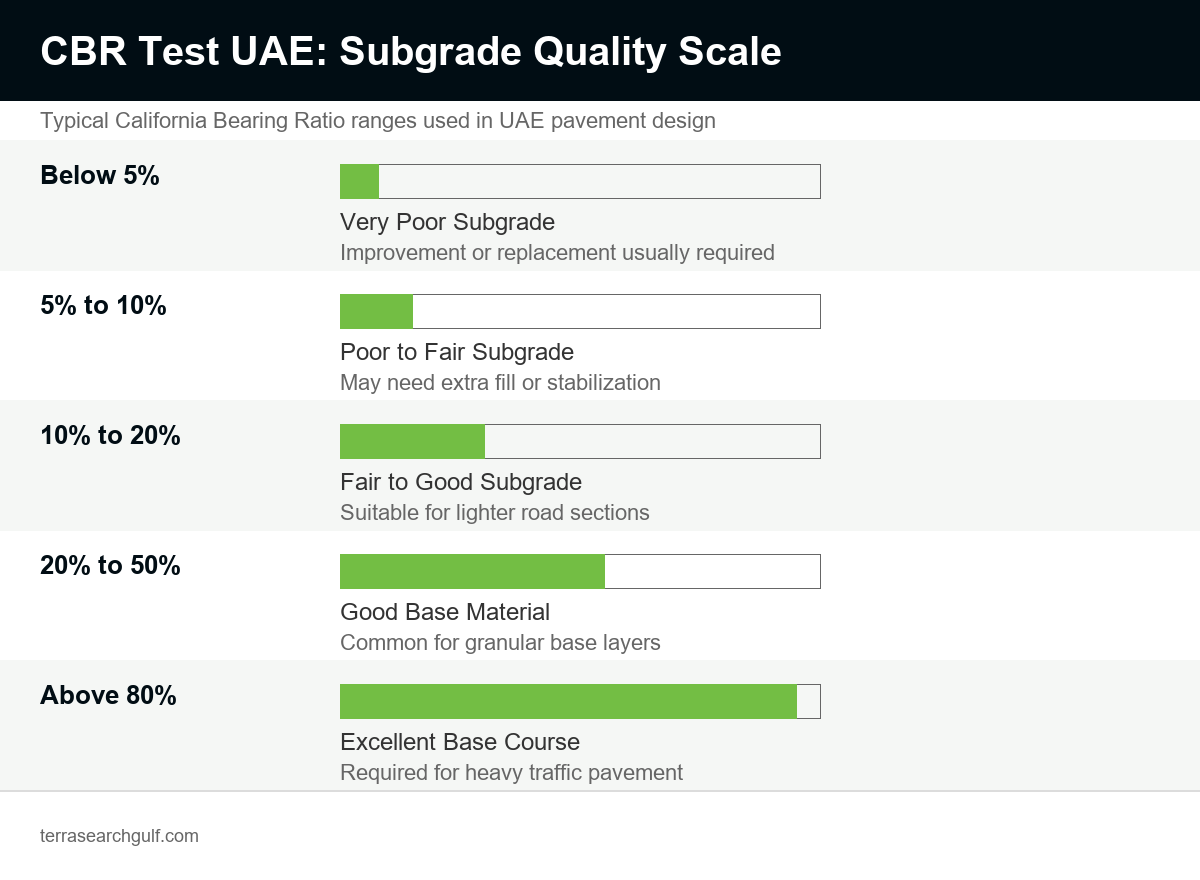
A soft desert sabkha soil might return a CBR value in the low single digits, while a well compacted granular base course can exceed 80 percent. This single index links laboratory work directly to real world geotechnical laboratory testing programs, and it remains a mandatory input on nearly every government and municipal road tender across the country.
UAE conditions add extra pressure on this single number. Intense summer heat softens asphalt and increases the load transferred to the layers below, while occasional heavy rainfall can raise moisture in poorly drained subgrade almost overnight. A CBR figure measured under representative, soaked conditions gives designers a realistic safety margin rather than an optimistic value that only holds up in dry weather.
How CBR Relates to Subgrade and Base Course Strength
Subgrade is the natural or improved soil beneath a road, while the base course is the engineered granular layer placed above it. Both layers need adequate CBR values, since a weak subgrade or base course under strong asphalt will still fail under repeated heavy vehicle loading over time.
Terrasearch pairs CBR results with related tests, including aggregate testing and material testing laboratory checks, to confirm that every layer beneath the wearing course meets project specification. A low CBR subgrade usually calls for extra fill, chemical stabilization or a thicker base course to spread traffic loads safely.
Where bearing capacity is also a concern for structures near the road corridor, plate load testing provides a complementary field measurement. Combining these results gives designers a fuller picture of how the ground will perform once traffic opens, rather than relying on a single index value in isolation.
Chemical composition can also affect how a subgrade performs over time, particularly where sulphates or salts are present in coastal or reclaimed sites. Pairing CBR data with chemistry lab and material analysis results helps confirm that a subgrade classified as strong today will not degrade chemically and lose strength within a few years of the road opening to traffic.
CBR Testing Procedure: Laboratory and In Situ Methods
Terrasearch runs CBR testing two ways. Laboratory CBR follows a compaction, soaking and penetration sequence on prepared specimens, while in situ CBR uses field equipment to assess subgrade strength directly on site, without removing and transporting samples back to the lab.
In the laboratory, technicians compact soil into a mould at defined energy levels, closely tied to compaction and material testing results such as the Proctor test, then typically soak the specimen for four days to simulate worst case moisture conditions before running the penetration test. This soaked value is the one most UAE road specifications require.
In situ CBR, often carried out with a dynamic cone penetrometer, gives contractors a fast strength check during earthworks and helps confirm that a soil investigation programme translates into consistent compaction on site. Field results also support quality control at a construction testing lab partner reviewing compliance against ASTM standards referenced in most UAE contracts.
Sampling frequency matters as much as the test method itself. A single CBR value taken at one point along a long corridor rarely represents the full route, so specifications typically call for samples at regular chainage intervals and at every visible change in soil type. This approach, backed by reliable material standards checks, keeps pavement design grounded in actual site conditions rather than a single assumed number.
From CBR Results to Pavement Thickness Design
Once CBR values are known, pavement engineers use empirical design charts and methods, including those built on AASHTO pavement design standards, to calculate how thick each asphalt, base and subbase layer needs to be for the expected traffic volume and axle loading.
Lower subgrade CBR values generally require a thicker pavement structure to distribute traffic stress before it reaches weak soil, while higher CBR subgrades allow thinner, more economical designs. This is why accurate pavement design UAE work, supported by our accredited material testing laboratory, depends on reliable CBR data rather than assumed values from a generic textbook table.
CBR results also inform related quality checks once construction begins, including asphalt testing of the finished wearing course. For public infrastructure, many UAE authorities also require an independent third party testing lab to confirm that as built pavement layers match the CBR based design assumptions before handover.
Design charts typically translate a design CBR into a total pavement thickness for a given traffic category, then split that thickness between asphalt, base and subbase layers based on the relative cost and performance of each material. A one percentage point difference in design CBR can shift total pavement thickness by several centimetres, which is why engineers avoid rounding or estimating this figure and rely on tested values instead.
CBR Testing and Dubai’s Road and Highway Development
Dubai’s road and highway network keeps expanding to serve new communities, logistics corridors and mega projects, and each new corridor needs geotechnical investigation services early in design so pavement layers are sized correctly for the actual ground conditions along the route.
Variable ground conditions across the Emirates, from soft coastal sabkha to denser inland soils, mean CBR values can shift significantly within a single project corridor. Early soil testing at regular intervals helps designers avoid a one size fits all pavement section that overspends in strong ground and underperforms in weak ground.
Combining CBR data with land survey and geophysical survey information gives contractors a complete subsurface picture before mobilization. As Dubai’s infrastructure programme continues to grow, this upfront testing investment consistently costs far less than resurfacing a road that fails within its first few years of service.
The same principle applies to logistics parks, airport aprons and industrial yards carrying heavy repeated axle loads, not just public highways. Any project where wheel loads repeatedly cross the same surface benefits from the same CBR based design approach, since pavement failure under sustained heavy traffic tends to appear years earlier than on a lightly used access road.
Conclusion
A reliable CBR test UAE road authorities and consultants can depend on is not an optional formality. It is the data point that determines whether a pavement section performs for its full design life or fails early under UAE traffic and heat. Getting it right at design stage protects budgets far more effectively than repairs after opening. Terrasearch Gulf delivers accredited laboratory and in situ CBR testing, backed by our full speciality testing services and complete range of services across the UAE. To schedule a CBR programme for your next road or infrastructure project, contact Terrasearch today.
Frequently Asked Questions
1. What is a CBR test UAE engineers require before road construction?
A CBR test UAE engineers require measures subgrade and base course strength by comparing plunger penetration resistance to a standard crushed stone sample, giving designers a reliable percentage value for pavement thickness and material decisions.
2. How is CBR different from a Proctor compaction test?
The Proctor compaction test finds the optimum moisture content and maximum dry density for a soil, while the CBR test measures strength after that compaction is achieved. Terrasearch runs both together, since compaction quality directly affects the final CBR result.
3. What CBR value is considered good for road subgrade?
Subgrade with a CBR below 5 percent is generally weak and may need improvement, while values above 15 percent are considered strong. Base course material typically needs a CBR of 80 percent or higher for heavy traffic roads.
4. Can CBR testing be done on site instead of in a lab?
Yes. In situ CBR testing uses a dynamic cone penetrometer or a field CBR frame to assess subgrade strength without removing samples, useful for quick checks during earthworks and for verifying compacted layers before paving.
5. Why does CBR dubai testing matter for highway projects?
Dubai and wider UAE highway projects carry heavy, continuous traffic loads. A CBR dubai result that is too low, if missed, can lead to early rutting, cracking and expensive resurfacing within just a few years of opening.
6. Does CBR testing relate to concrete testing on the same project?
CBR testing evaluates subgrade and base layers, while concrete testing checks pavement or structural concrete quality separately. Many UAE road projects request both from Terrasearch together, since one confirms the ground and the other confirms the finished structure meets specification.
7. Are other material tests needed alongside CBR for road and bridge projects?
Yes. Larger corridors often need steel testing and NDT for reinforcement and structural testing and analysis for bridge or culvert elements, in addition to CBR, ensuring every material along the corridor meets UAE design and safety standards.
8. Does Terrasearch offer survey work alongside CBR testing?
Yes. Terrasearch provides survey services alongside laboratory and field testing, helping contractors combine topographic and geotechnical data early in design so pavement layers are sized correctly for the actual ground conditions found along the corridor.
9. Is Terrasearch accredited to perform CBR testing in the UAE?
Yes. Terrasearch Gulf Soil Testing operates an accredited laboratory and field testing program across the UAE, covering subgrade, base course and aggregate work. Learn more about the team and accreditation scope on the about us page before appointing a testing partner.
10. Where can I see all the testing services Terrasearch offers in the UAE?
Visit the Terrasearch Gulf home page for a full overview of geotechnical, material, structural and survey testing services available across the UAE, including CBR test UAE packages tailored to road and infrastructure projects of any scale.